The Best Self-Tan Serum for skin with Hyperpigmentation Concerns
by Boë Beauté
If you have hyperpigmentation, the instinct is often to avoid self-tanner entirely. But the concern isn't self-tanning — it's the ingredients surrounding it. With the right formula, a self-tanning serum can actually work alongside your hyperpigmentation routine, not against it. Here's how.
What Is Hyperpigmentation and What Causes It?
Hyperpigmentation is the overproduction of melanin in localised areas of skin, resulting in patches or spots that appear darker than the surrounding skin. It is not a single condition — it's an outcome that several different triggers can produce.
The most common types arepost-inflammatory hyperpigmentation (PIH), which follows acne, eczema, or skin injury;melasma, driven by hormonal changes and UV exposure; andsolar lentigines(age spots or sun spots), caused by cumulative UV damage. All three involve an overactivation of melanocytes — the pigment-producing cells in the skin's basal layer.
The key biological step that makes hyperpigmentation visible is thetransfer of melanosomes(pigment vesicles) from melanocytes to the surrounding keratinocytes that make up the visible skin surface. This is the step that niacinamide directly interrupts.
How Niacinamide Reduces Hyperpigmentation: The Mechanism
Niacinamide (vitamin B3) is one of the most well-researched skincare actives for hyperpigmentation. Unlike some brightening ingredients (hydroquinone, kojic acid) that inhibit melanin synthesis, niacinamide works further downstream — it inhibits the transfer of melanosomes from melanocytes to keratinocytes.
This means it doesn't prevent melanin from being made; it prevents it from reaching the skin surface, where it creates visible dark spots. The visible result is a gradual, even fading of existing pigmentation over several weeks of consistent use.
Step 1
Trigger
UV exposure, inflammation (acne, eczema), or hormones activate melanocytes in the basal skin layer to overproduce melanin.
Step 2
Pigment packaging
Melanin is packaged into melanosomes — vesicles that are passed from melanocytes into surrounding keratinocytes.
Step 3
Niacinamide interrupts
Niacinamide inhibits this melanosome transfer, preventing the pigment from reaching the skin cells that form the visible surface.
Step 4
Gradual fading
As skin cells turn over naturally (every 28–40 days), the un-pigmented newer cells rise, gradually evening the skin tone.
Beyond pigmentation, niacinamide also repairs the skin barrier (reducing TEWL), reduces redness, minimises pore appearance by preventing debris buildup, and restores cellular energy in fatigued or stressed skin. This breadth of action makes it one of the few ingredients that can address hyperpigmentation, sensitivity, and ageing simultaneously.
Evidence base
Studies using 4–5% niacinamide applied twice daily show measurable reduction in hyperpigmentation and improved skin evenness within 8–12 weeks. The ingredient is well tolerated by all skin types including sensitive, rosacea-prone, and acne-prone skin, with a favourable safety profile across multiple clinical studies.
Can You Use Self-Tanner If You Have Hyperpigmentation?
The short answer is yes — and the reasoning matters. Self-tanner's active ingredient, DHA (dihydroxyacetone), works only in the outermost layer of dead skin cells. It reacts with amino acids to produce a brownish colour through a chemical process that has nothing to do with melanin or UV exposure. It does not activate melanocytes or stimulate pigment production.
The concern that self-tanner worsens hyperpigmentation typically comes from two sources: formulas that contain irritating ingredients (fragrance, alcohol) which can trigger post-inflammatory pigmentation in sensitive skin, or uneven application that accentuates rather than minimises existing tone variation.
A fragrance-free, alcohol-free self-tanner applied evenly on well-prepared skin does not worsen hyperpigmentation. In fact, a gradual tan can temporarily reduce the visual contrast between dark spots and surrounding skin — making patches appear less prominent while the niacinamide works to fade them over time.
Why the combination works
Niacinamide addresses the pigmentation at a cellular level while DHA and Erythrulose produce surface colour. They operate independently — one in living skin cells, the other in dead surface cells — so they complement rather than interfere with each other. Using them in the same formula is not a compromise; it's genuinely additive.
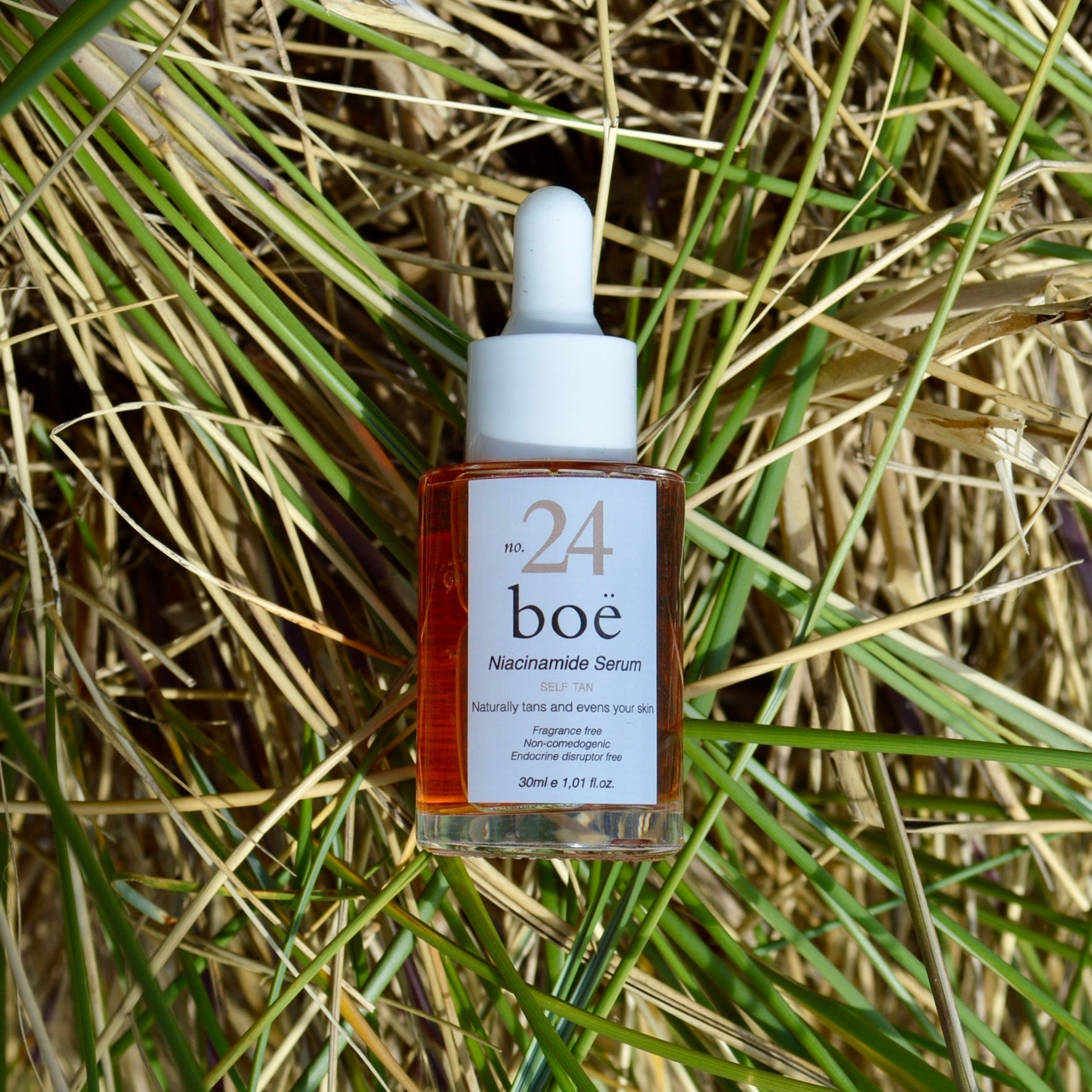
No.24 combines an active hyperpigmentation serum base with a DHA/Erythrulose tanning system. Every ingredient was selected for a specific function — there are no fillers. Here is the full breakdown:
Inhibits melanosome transfer from melanocytes to keratinocytes, gradually fading dark spots and evening skin tone. Also reduces redness, strengthens the skin barrier (reduces TEWL), minimises pores, and restores cellular energy. At 4%, it is within the evidence-based effective range (2–5%).
DHA - Dihydroxyacetone
Self-tanning
Reacts with amino acids in the skin's dead surface layer to produce a brownish colour. Works independently of melanin and UV exposure. Fast-acting; colour begins developing within 2–4 hours. Combined with Erythrulose to reduce the risk of orange tones and patchiness.
Erythrulose - Keto-sugartanning agent
Self-tanning
Works by the same mechanism as DHA but develops more slowly with a warmer, darker tone. Blended with DHA to produce a richer, more natural-looking result that lasts longer and minimises patchiness. Important for hyperpigmentation skin as it allows DHA to be used at lower, less oxidative concentrations.
Sodium Hyaluronate - Hyaluronic acid salt≥1%
Hydration
The skin-absorbable form of hyaluronic acid. Retains moisture in the outer skin layers, keeping skin plump and hydrated. Helps maintain the microbiome. Particularly important for hyperpigmentation-prone skin, where a healthy barrier reduces PIH formation from minor irritation.
Panthenol - Provitamin B5≥1%
Barrier repair
Converts to pantothenic acid in the skin, promoting cell regeneration and barrier repair. Anti-inflammatory and humectant. A standard base ingredient in all Boë serums at minimum 1%.
Anthemis Nobilis Flower Water - Roman chamomile water5%
Soothing
Roman chamomile floral water with anti-inflammatory and skin-calming properties. Soothes reactive skin and helps maintain a calm baseline, which is important for pigmentation-prone skin where inflammation is a primary trigger.
Allantoin - Comfrey-derived or synthetic≥0.2%
Skin renewal
A cell-proliferant that promotes the shedding of old surface cells and supports the growth of new ones. This gentle keratolytic action accelerates skin cell turnover — speeding up the natural process by which un-pigmented new cells replace pigmented old cells.
Activates aquaporins — the skin's water-transport channels — for deep, cellular-level hydration. Particularly beneficial for skin under stress from active ingredients, helping maintain resilience.
Propanediol - Plant-derived glycol
Humectant / penetration
A lightweight humectant derived from corn sugar. Assists the penetration of other actives — meaning niacinamide and panthenol reach deeper skin layers more effectively. Non-irritating and non-comedogenic.
Boë recommends alternating No.24 Niacinamide Serum with Self Tan with No.23 Niacinamide Serum (the same formula without DHA or Erythrulose) every second or third day. This approach serves two purposes.
First, it gives the skin rest days between DHA applications, keeping the tan looking natural and gradual rather than built-up. Second, on No.23 days, the niacinamide, hyaluronic acid, panthenol, and allantoin work without the tanning reaction happening simultaneously — some users find this supports their skin's response to the active ingredients.
Tan days
No.24
Niacinamide + DHA + Erythrulose Pigment fading + natural glow
← alternate →
Rest days
No.23
Niacinamide only Pure pigment fading + barrier repair
How to Use No.24 in a Hyperpigmentation Skincare Routine
Serums work best when applied to clean skin before heavier creams and SPF. For hyperpigmentation, the sequence of application matters:
Cleanse Use a gentle, fragrance-free cleanser. Remove make-up and impurities thoroughly. In the morning, cold water is sufficient if skin is clean from the night before.
Apply No.24 (or No.23) serum on damp skin Apply a few drops to clean, slightly damp skin. The dampness helps hyaluronic acid draw moisture in effectively. Alternate between No.24 (with tan) and No.23 (without) every second or third day based on your desired glow level.
Allow to absorb fully before the next step Give the serum 1–2 minutes to absorb before applying moisturiser. This prevents dilution of the active ingredients and allows the tanning reaction in No.24 to begin uninterrupted.
Apply moisturiser (and SPF in the morning) Seal in the serum with your regular fragrance-free moisturiser. In the morning, follow with SPF30 minimum — essential when treating hyperpigmentation, as UV exposure is the primary trigger for worsening pigmentation. Boë's No.12 Face Cream SPF30 is formulated to work with the serum routine.
Be consistent — results take 8–12 weeks Niacinamide works through the natural skin cell turnover cycle. Visible improvement in hyperpigmentation typically requires 8–12 weeks of consistent daily use. The tan from No.24 develops within 4–6 hours of application and can be maintained with regular alternating use.
SPF is non-negotiable for hyperpigmentation
Niacinamide addresses existing pigmentation, but UV exposure will continue triggering new spots without protection. Using SPF daily — including in winter and on cloudy days, when UVA rays penetrate regardless — is the single most important step in any hyperpigmentation routine. It is the difference between fading spots slowly and fading spots that keep reforming.
Frequently Asked Questions
Can self-tanner make hyperpigmentation worse?
Standard self-tanner should not worsen hyperpigmentation, because DHA works only in the dead outer layer of skin and does not interact with melanin-producing cells. However, self-tanners containing fragrance, alcohol, or irritating ingredients can trigger post-inflammatory hyperpigmentation (PIH) in sensitive skin. Using a fragrance-free, alcohol-free formula paired with niacinamide significantly reduces this risk.
How does niacinamide reduce hyperpigmentation?
Niacinamide (vitamin B3) reduces hyperpigmentation by inhibiting the transfer of melanosomes (pigment vesicles) from melanocytes to the surrounding keratinocytes that form the visible skin surface. This doesn't stop melanin production but prevents it from reaching the surface, gradually fading existing dark spots as the skin cells turn over over several weeks.
What percentage of niacinamide is effective for dark spots?
Clinical studies show effectiveness at 2–5% niacinamide. Boë's No.24 contains 4% — within the evidence-based effective range. Concentrations above 5% are not consistently more effective and can cause mild flushing in some sensitive skin types.
What is the difference between DHA and Erythrulose?
Both react with amino acids in the skin's dead surface layer to produce colour — neither involves melanin or UV exposure. DHA works quickly but can produce orange tones and patchiness alone. Erythrulose develops more slowly with a warmer, darker tone and more even finish. Together they produce a richer, longer-lasting, more natural-looking tan while allowing lower DHA concentrations, reducing the risk of oxidative irritation.
Can I use niacinamide and self-tanner together?
Yes. Niacinamide works in living skin cells to inhibit pigment transfer. DHA and Erythrulose react with dead surface cells to produce colour. These are entirely independent mechanisms — they do not interfere with each other. Using them in one formula, as in No.24, lets you address hyperpigmentation and achieve an even tan simultaneously.
What is the No.23 and No.24 alternating routine?
Alternating No.24 (with self-tan) with No.23 (niacinamide serum without DHA) every second or third day maintains a gradual, natural-looking tan while giving skin rest days without the tanning reaction. No.23 holds a 100/100 sensitive skin rating from SkinSAFE (developed with the Mayo Clinic). The rotation also prevents DHA accumulation, which can cause the tan to look unnatural if applied daily.
Is No.24 safe for sensitive and acne-prone skin?
Yes. No.24 is fragrance-free, alcohol-free, allergen-free, paraben-free, non-comedogenic, and free of endocrine disruptors. It is formulated for all skin types including sensitive, rosacea-prone, and acne-prone skin. It is also considered safe during pregnancy and breastfeeding after the first trimester — always consult your healthcare provider.
If you love La Roche-Posay, Avene, CeRaVe or similar clean skincare brands for its dermatologist-recommended, sensitive-skin-friendly formulas and you’re concerned about hyperpigmentation, - and love a natural healthy tan - the No.24 Niacinamide Serum with Self Tan is your ideal skincare companion. This innovative serum does more than tan - it works in harmony with your skin to strengthen, repair, and even out your complexion while remaining ultra-gentle.
Plus, when replaced every second or third day daily with No.23 Niacinamide Serum (without self-tan), which holds a perfect 100/100 rating for sensitive skin on SkinSAFE by the Mayo Clinic. This means you can enjoy all the skin-strengthening and brightening benefits without irritation, as well as it offers a customizable, stress-free, effortless and natural tanning experience, that evens your skin natural and gently while it prioritizes your skin health.
“Niacinamide is one of the best ingredients for reducing hyperpigmentation while supporting a healthy skin barrier.”
Why No.24 is the Ultimate Skin-First Self-Tanning Solution
Unlike traditional self-tanners that can exacerbate uneven skin tone or dry out the skin, No.24 Niacinamide Serum with Self Tan is formulated with powerful, skin-loving ingredients that actively improve your complexion while delivering a natural-looking, golden glow.
How it Works on Multiple Levels
Strengthens & Repairs
Works with your skin’s essential fatty acids and cells to build up the moisture barrier and repair damage, a must for sensitive, pigmentation-prone skin.
Brightens & Evens Skin Tone
Niacinamide reduces redness and pigment transfer, helping to prevent dark spots from worsening.
Minimizes Pores & Prevents Breakouts
Niacinamide also prevents oil and debris buildup, keeping pores clear and refined.
Deep Hydration & Barrier Support
Hyaluronic acid locks in moisture, ensuring plump, healthy, and hydrated skin.
Calms & Soothes
Anthemis nobilis flower water (chamomile) relaxes and refreshes sensitive skin.
“A strong skin barrier is essential for preventing hyperpigmentation and irritation. Niacinamide plays a key role in keeping it intact.”
For those who love La Roche-Posay’s commitment to gentle yet effective skincare, No.24 (and No.23!) offer the perfect self-tanning solution that prioritizes skin health.
No.24 is the only niacinamide serum that combines skin renewal, hydration, redness reduction, and a natural self-tan—all while being safe for sensitive skin.
If you’re looking for a La Roche-Posay-level skincare approach, but with the added benefit of a natural glow, No.24 is unmatched in the market.


Share:
Why No.3 Tan Lotion is the Best Self Tan Lotion for those with Rosacea, Eczema or irritated skin
The Best Self-Tan Serum for Skin Concerned with Wrinkles & Skin-Aging