
Most people know sunscreen is essential. Fewer know that many formulas contain microplastics — tiny synthetic polymers used to improve texture and stability. Here's what's actually in your SPF, what the evidence says about the risks, and how to read a label.
What Are Microplastics — and Why Are They in Sunscreen?
Microplastics are synthetic plastic particles under 5mm in size that do not biodegrade in the environment. In skincare, they are most commonly used as film-formers, texture agents, and emulsifiers — ingredients that make a product easier to spread, more water-resistant, or smoother on skin.
In sunscreen specifically, synthetic polymers are often added to suspend UV filters evenly, create a lightweight feel, and improve water resistance. The problem is that they achieve this with materials that are, by definition, persistent plastic.
Ingredient check
Microplastics in sunscreen don't always appear under an obvious name. They can be listed as acrylates, carbomers, nylons, or silicones — none of which sounds like "plastic" on an ingredient panel.
Which Ingredients in Sunscreen Are Microplastics?
The following synthetic polymers are commonly found in sunscreen formulas. If you see any of these on an ingredient list, the product contains microplastics:
| Ingredient name | What it does | Risk type |
|---|---|---|
| Polyethylene (PE) | Film-former, texture agent | Skin + Environment |
| Polypropylene (PP) | Emulsifier, stabiliser | Skin + Environment |
| Polymethyl Methacrylate (PMMA) | Texture enhancer, makes products feel silky | Environment |
| Nylon-12 / Nylon-6 | Film-former, creates water-resistance | Environment |
| Acrylates Copolymer | Thickener, stabilises UV filters in emulsions | Skin + Environment |
| Carbomer | Gelling agent, improves spreadability | Environment |
| Dimethicone / Cyclopentasiloxane | Silicone emollient, creates slip and smoothness | Skin + Environment |
What Are the Health Risks of Microplastics in Sunscreen?
Research into the health effects of microplastics is still emerging, but early findings are concerning. Microplastics have been detected in human blood, lung tissue, liver, and placental tissue in recent peer-reviewed studies.
Skin and sensitivity concerns
Synthetic polymer particles can clog pores and cause contact irritation, particularly for those with eczema, rosacea, or acne-prone skin. The physical structure of some particles creates friction at the skin surface, which can disrupt barrier function over time.
Endocrine disruption
Several synthetic UV filters — including oxybenzone (benzophenone-3) and octinoxate (ethylhexyl methoxycinnamate) — have been classified as potential endocrine disruptors by the European Commission's Scientific Committee on Consumer Safety (SCCS). Endocrine disruptors interfere with the body's hormonal system and have been associated with reproductive and developmental effects.
These filters are not the same as structural microplastics, but they are frequently found in the same conventional formulas — meaning a sunscreen with microplastic texture agents may also carry endocrine-disrupting UV filters.
What this means for sensitive skin
For people who are pregnant, breastfeeding, or managing a skin condition, both synthetic polymer particles and endocrine-disrupting UV filters represent a reason to scrutinise a sunscreen label more carefully. Formulas explicitly free of both categories offer greater peace of mind for daily use.

How Microplastics in Sunscreen Affect the Ocean and Marine Life
When sunscreen washes off — in the shower, in the sea, or at the pool — synthetic polymers enter the water system. Because they don't biodegrade, they accumulate in waterways, sediment, and living organisms.
The scale of the problem
14M+ tonnes of microplastics estimated on the ocean floor
~6,000 tonnes of sunscreen enter coral reef zones each year
700+ marine species affected by plastic pollution
Marine organisms — from plankton to fish — ingest microplastics, mistaking them for food. This causes physical blockages, toxic effects, and disrupted feeding behaviour. Through bioaccumulation, microplastics move up the food chain, reaching species including those consumed by humans.
Certain chemical UV filters compound the problem. Oxybenzone and octinoxate are toxic to coral at concentrations as low as 62 parts per trillion — contributing to coral bleaching in reefs already stressed by warming water temperatures. Hawaii and Palau have both banned these filters for this reason.
Conventional Sunscreen vs Microplastic-Free Sunscreen: What Changes?
Making the switch to a microplastic-free formula doesn't mean compromising on protection. Here's how the two approaches compare across the criteria that matter most:
| Feature | Conventional sunscreen | Microplastic-free SPF |
|---|---|---|
| UV protection | Broad-spectrum (chemical or mineral filters) | Broad-spectrum (stable mineral/organic filters) |
| Texture agents | Synthetic polymers (PE, acrylates, silicones) | Plant-derived emollients (e.g. Coco Caprylate/Caprate) |
| Endocrine disruptors | Often present (oxybenzone, octinoxate) | Absent — safe for pregnant and breastfeeding use |
| Biodegradability | Non-biodegradable polymer residue | Biodegradable or naturally-derived ingredients |
| Sensitive skin | Higher irritation risk from polymers and fragrance | Non-comedogenic, fragrance-free, allergen-free |
| Marine impact | Microplastics and toxic UV filters reach waterways | No adverse effects on marine ecosystems |
Boë Beauté's Microplastic-Free SPF Range
All Boë Beauté sunscreens are formulated without synthetic polymers, endocrine disruptors, parabens, fragrances, or allergens. In place of conventional texture agents, Boë uses Coco Caprylate/Caprate — a plant-derived ester from coconut oil that achieves a lightweight, skin-compatible texture while actively supporting the skin's moisture barrier.
UV filters are selected for both photostability and safety. Diethylamino Hydroxybenzoyl Hexyl Benzoate provides full UVA-range coverage; Diethylhexyl Butamido Triazone absorbs both UVA and UVB at very low concentrations and is classified as photostable, retaining over 90% of its SPF efficacy after 25 hours.
|
No.14 Sunscreen Body SPF30 Broad-spectrum UVA/UVB protection in a fast-absorbing body lotion. No cast, no fluff, no oily residue. Marine-life friendly and safe during pregnancy. Microplastic-free |
|
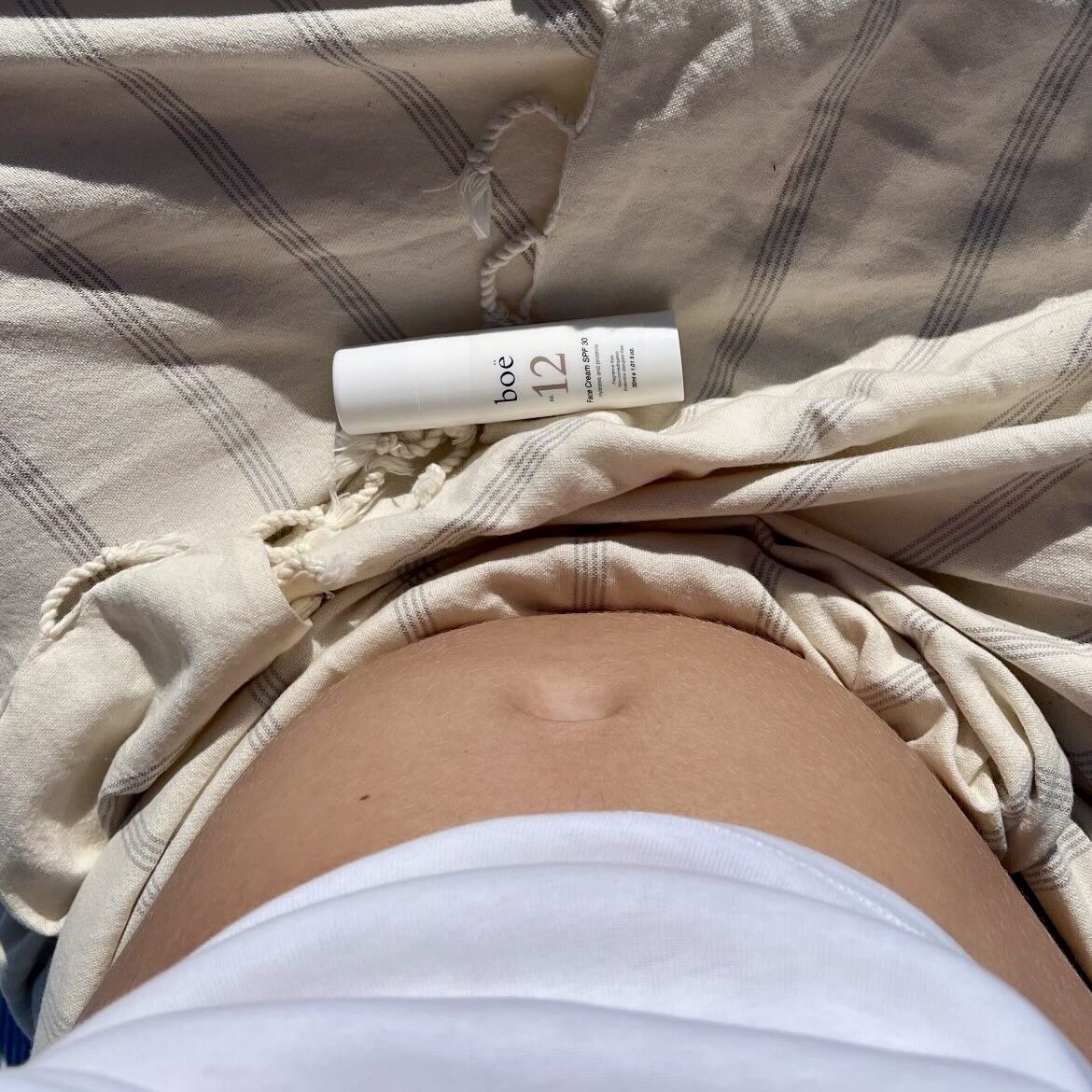
No.12 Face Cream SPF30 A daily moisturising face cream with broad-spectrum SPF. Lightweight enough for morning use under makeup. Free of endocrine disruptors and allergens. No endocrine disruptors |
|
No.13 Face Cream SPF30 with Self Tan Combines daily sun protection with a natural, buildable self-tan. Non-comedogenic, fragrance-free, and photostable for full-day wear. SPF + tan in one |
Photostability note
Photostability matters because some UV filters degrade when exposed to sunlight, reducing protection over time. Boë's UV filters are selected for stability — No.14 maintains efficacy across 8+ hours of wear, avoiding the need to reapply excessively when used as directed.
How to Check Your Sunscreen for Microplastics: A Quick Label Guide
You don't need to memorise every polymer name. Here's a practical approach when checking a product:
- Scan for "-mer" or "-ylene" suffixes — most synthetic polymers follow naming patterns like polyethylene, acrylates copolymer, or carbomer. Any word ending in "-mer" or containing "poly-" is worth investigating.
- Look for silicones — ingredients ending in "-cone" or "-siloxane" (dimethicone, cyclopentasiloxane) are silicone-based synthetics that accumulate in waterways.
- Check the active ingredients — if oxybenzone, benzophenone-3, or octinoxate appear, the formula uses endocrine-disrupting UV filters.
- Use the Beat the Microbead app — scan the barcode for an instant assessment. The app is free and maintained by the Plastic Soup Foundation.
- Look for "Zero Plastic Inside" certification — this logo from Beat the Microbead confirms the product has been independently verified as microplastic-free.
Frequently Asked Questions
Do sunscreens really contain microplastics?
Yes. Many conventional sunscreens use synthetic polymers — a category that includes microplastics — as texture enhancers, film-formers, and stabilisers. Common examples include polyethylene (PE), polypropylene (PP), polymethyl methacrylate (PMMA), and acrylates copolymer. These ingredients improve the feel and spreadability of the product but do not biodegrade in the environment.
What are the health risks of microplastics in sunscreen?
Microplastics have been detected in human blood, lung tissue, and placentas in recent studies. In skincare, they can clog pores and cause irritation, particularly for sensitive skin. Some synthetic UV filters found alongside microplastics are also classified as potential endocrine disruptors — chemicals that interfere with the body's hormonal system.
How do I know if my sunscreen contains microplastics?
Check the ingredient list for: Polyethylene (PE), Polypropylene (PP), Polymethyl Methacrylate (PMMA), Nylon-12 or Nylon-6, Acrylates Copolymer, Carbomer, or Dimethicone. The free Beat the Microbead app lets you scan product barcodes to identify hidden microplastics quickly.
Are mineral sunscreens automatically microplastic-free?
Not automatically. Mineral sunscreens use zinc oxide or titanium dioxide as UV filters — both microplastic-free. However, the rest of the formula can still contain synthetic polymers as emulsifiers or texture agents. Always check the full ingredient list, not just the active ingredients section.
Is Boë's No.14 Sunscreen microplastic-free?
Yes. Boë's No.14 Sunscreen Body SPF30 is formulated without synthetic polymers, endocrine disruptors, parabens, fragrances, or allergens. It uses Coco Caprylate/Caprate — a plant-derived emollient from coconut oil — in place of synthetic texture agents, and its UV filters are photostable and selected for both efficacy and safety.
Why are microplastics in sunscreen harmful to marine life?
When sunscreen washes off in the sea, microplastics enter the water system and don't degrade. Marine organisms ingest these particles, causing blockages, toxicity, and disrupted feeding. Microplastics also accumulate up the food chain. Additionally, certain UV filters like oxybenzone are toxic to coral at very low concentrations and have been linked to coral bleaching.
Share:
Responsible Microplastic-Free Skincare: How Boë Leads the Way
Why No.3 Tan Lotion is the Best Self Tan Lotion for those with Rosacea, Eczema or irritated skin