Finding a self-tanner when you have allergies, rosacea, or Multiple Chemical Sensitivity isn't just a matter of choosing "sensitive skin" formulas. Most self-tanners — even gentle-marketed ones — contain fragrance allergens, preservatives, and synthetic additives that trigger reactions. Here's what to look for, what to avoid, and why the formula matters more than the marketing.
Why Most Self-Tanners Cause Reactions for Allergic Skin
The active tanning ingredient in self-tanners — DHA (dihydroxyacetone) — is not typically the cause of allergic reactions. DHA is a naturally-derived sugar compound that reacts with amino acids in dead skin cells to produce a brownish colour. It is generally well tolerated and is not a declared allergen under EU Cosmetics Regulation.
The problem lies in what surrounds DHA in a typical formula. Self-tanners use fragrance to mask DHA's faint natural scent. They use alcohol to speed up drying. They use synthetic preservatives to extend shelf life and polymer-based texture agents to improve feel. Each of these categories carries significant allergen risk for sensitive skin — and most conventional formulas use several.
For people with allergies, Multiple Chemical Sensitivity (MCS), or conditions like rosacea, this means that even one problematic ingredient in a long formula can trigger headaches, skin rashes, respiratory symptoms, or contact dermatitis — making self-tanning feel like an unavoidable tradeoff between a natural glow and a reaction.
Common Allergens Found in Self-Tanners
Understanding which ingredients cause reactions helps you read a label confidently rather than guessing. Here are the categories that account for the vast majority of self-tanner reactions:
| Ingredient / Category |
Why it causes reactions |
Regulatory status |
|
Fragrance / Parfum - May contain hundreds of chemical compounds
|
The single most common cause of cosmetic contact dermatitis. "Fragrance" on a label can represent dozens of undisclosed chemicals, including potent sensitisers. Triggers flushing, rashes, and headaches in allergic and MCS individuals. |
Declared allergen |
|
Linalool, Limonene, Geraniol - EU fragrance allergens (of 26 declared)
|
Naturally-occurring fragrance compounds found in essential oils and synthetic perfumes alike. Must be declared separately on EU labels when above 10 ppm in leave-on products. Common triggers for contact allergy and MCS reactions. |
EU Mandatory Declaration |
|
Denatured Alcohol (SD Alcohol) - Also: Alcohol Denat., Ethanol
|
Rapidly disrupts the skin barrier, increasing permeability to other potential irritants. Causes burning sensations, dryness, and can worsen rosacea and eczema. Also a common trigger for people with alcohol sensitivity. |
Barrier disruptor |
|
Methylisothiazolinone (MIT) - Also: CMIT (methylchloroisothiazolinone)
|
A preservative classified as a top contact allergen by European dermatologists. Banned in EU leave-on products since 2016 due to sensitisation rates. Still present in some products manufactured outside the EU. |
EU Banned (leave-on) |
|
Parabens - Methylparaben, Propylparaben, Butylparaben
|
Widely used preservatives that have been linked to skin sensitisation over long-term use. Also classified as potential endocrine disruptors — meaning they may interfere with hormonal signalling, of particular concern for people with MCS. |
Endocrine concern |
|
Endocrine Disruptors - Various synthetic UV filters, certain preservatives
|
Chemicals that interfere with the body's hormonal system. People with MCS often have heightened sensitivity to endocrine-disrupting compounds. Reducing overall chemical load — including endocrine disruptors — is a standard priority in MCS skincare management. |
Hormonal risk |
Important distinction
"Natural" fragrances — essential oils, botanical extracts used for scent — are not automatically safer for allergic skin. Linalool (found in lavender), limonene (found in citrus), and geraniol (found in rose) are among the EU's declared fragrance allergens regardless of whether they come from synthetic or natural sources. A product labelled "natural" that contains lavender oil is not allergy-free.
What Is Multiple Chemical Sensitivity and Why It Matters for Self-Tanning
Multiple Chemical Sensitivity (MCS) is a chronic condition characterised by recurrent symptoms triggered by low-level chemical exposures that most people tolerate without any reaction. The condition is not fully understood, but it is recognised by healthcare systems in several countries and affects daily life in significant ways.
For people with MCS, even trace amounts of fragrance, preservatives, or synthetic additives in skincare can trigger symptoms. This makes the self-tanning category particularly challenging — it is one of the most chemically complex categories in beauty, typically containing 15–30 ingredients with heavy use of fragrance and synthetic emulsifiers.
Trigger type
Fragrance compounds
Both synthetic perfume and natural essential oils can trigger MCS reactions — headaches, skin symptoms, and respiratory effects, often at very low concentrations.
Trigger type
Preservative systems
Some preservatives — especially MIT, CMIT, and formaldehyde-releasing agents — act as sensitisers even in very small amounts. People with MCS are disproportionately affected.
Trigger type
Cumulative load
MCS is sometimes described as a "total body load" condition — multiple small exposures that each seem tolerable can combine to push the system into reaction. Reducing every possible source of chemical exposure matters.
What helps
Minimal ingredient lists
Formulas with fewer, well-identified ingredients reduce the total chemical load. For MCS, shorter ingredient lists are generally safer than longer ones, even if individual ingredients are all "safe".
The Boë origin story
Boë Beauté was founded because its founder Lars's wife, Louise, developed multiple sensitivities, allergies, and Rosacea from years of professional exposure to fragrances and synthetic ingredients as a model. Two of their children also have allergies and rosacea. The brand's Danish biotech formulation approach is built on a simple principle: use only what the skin needs, nothing it doesn't. All Boë products are produced in Copenhagen and have been tested among people with MCS, fragrance allergies, and severe skin sensitivities.
How to Read a Self-Tanner Label for Allergens
Most people look at the top few ingredients on a list. For allergic skin, you need to scan the whole list — allergens and sensitisers are often present at low concentrations near the bottom. Here's what to look for:
Flags to check — and green signals to look for
✕ Parfum / Fragrance — anywhere in the list
This single entry can represent dozens of undisclosed compounds. For MCS or fragrance allergy, its presence anywhere in the list — even last — is a disqualifying ingredient.
✕ Individually listed fragrance chemicals
Linalool, Limonene, Geraniol, Citronellol, Benzyl Alcohol, Coumarin, Eugenol, Cinnamal — all EU-declared allergens that must be listed when above threshold. Their presence confirms a fragrance compound is in the formula.
✕ Alcohol Denat. / SD Alcohol high on the list
Small amounts of fatty alcohol (Cetearyl Alcohol, Cetyl Alcohol) are fine emollients. Denatured alcohol high in the list means barrier disruption and heightened sensitivity risk.
✕ MIT, CMIT, or formaldehyde-releasing preservatives
Methylisothiazolinone, Methylchloroisothiazolinone, DMDM Hydantoin, Imidazolidinyl Urea — all known sensitisers. MIT/CMIT are banned in EU leave-on products but can still appear in products manufactured elsewhere.
✓ Short, recognisable ingredient list
Fewer ingredients means fewer potential triggers. A formula built around a clean base — water, glycerin, DHA, Erythrulose, plant-derived emollients, and gentle preservatives — is inherently lower risk than a 30-ingredient formula.
✓ No entry for Parfum, fragrance chemicals, or essential oils
A complete absence of fragrance-related entries is the strongest single indicator of a genuinely allergy-friendly formula.
✓ Recognised clean preservatives
Phenoxyethanol, Sodium Benzoate, and Potassium Sorbate are widely used, effective, and generally well tolerated by most allergic skin types. They are the preservative system used across Boë's range.
Boë Beauté's Allergy-Free Self-Tanning Range
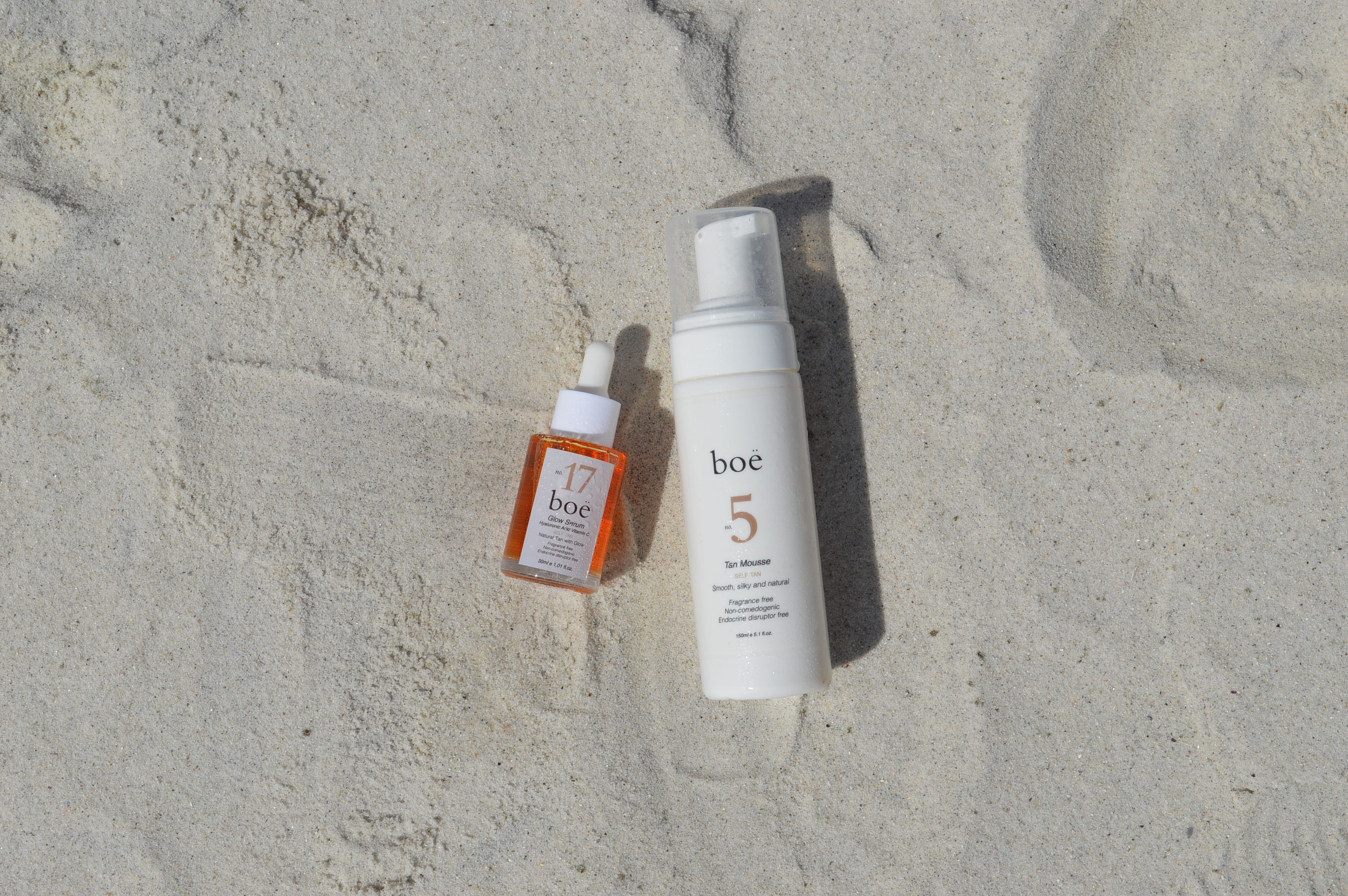
Every product in the Boë range is formulated to be fragrance-free, allergen-free, paraben-free, alcohol-free, non-comedogenic, and free of endocrine disruptors. The formula philosophy is the same across the entire range — the question is simply which texture and tanning approach suits your preference and skin type.
Safe Application Tips for Allergic and MCS Skin
Even with a genuinely allergy-free formula, a few application practices reduce the remaining risk further for people with severe sensitivities:
-
Always patch test first. Apply a small amount to the inner arm and wait 24 hours before full-body use. MCS reactions can be highly individual — what works for one person may not work for another at their stage of sensitivity.
-
Start with the simplest formula in the range. No.1 Tan Drops mixed into your existing fragrance-free moisturiser gives the most control — you add the minimum amount of new ingredients and can adjust the dose easily.
-
Apply in a well-ventilated space. For MCS users, reducing inhalation exposure during application is as important as skin contact. Open windows or apply outdoors where possible.
-
Wash hands thoroughly after application. Avoiding hand-to-face, hand-to-mouth, or hand-to-eye contact after applying any self-tanner reduces secondary exposure routes.
-
Don't apply to broken or actively irritated skin. Even allergy-free formulas can cause discomfort on compromised skin. Wait until any rosacea flare or eczema patch has settled.
-
Hydrate daily. Well-moisturised skin is less permeable to potential irritants and holds a self-tan more evenly. Use your regular fragrance-free emollient before and after tanning days.
Why Boë formulates this way
"Louise (my wife) is the main reason why Boë has been dedicated to making clean products from the start. Sensitive skin has been our default from the beginning. She thought self-tan was a genius invention but couldn't find any products that suited her needs — so I developed that for her." — Lars, founder of Boë Beauté.
This is not a marketing claim applied retrospectively to a generic formula. Every Boë product was developed with MCS, rosacea, and fragrance allergy as the primary use case. The brand is produced in Copenhagen and holds its formulation to Danish biotech standards — meaning every ingredient is selected, not just approved.
Frequently Asked Questions
What allergens are commonly found in self-tanners?
The most common allergens in self-tanners are fragrance compounds — the EU Cosmetics Regulation requires 26 specific fragrance chemicals to be declared on labels when above threshold. These include linalool, limonene, geraniol, and coumarin. Self-tanners also frequently contain denatured alcohol, parabens, and preservatives like methylisothiazolinone (MIT) — all known to cause reactions in allergic and sensitive skin.
What is Multiple Chemical Sensitivity (MCS) and how does it affect skincare?
MCS is a condition characterised by recurrent symptoms triggered by low-level chemical exposures that most people tolerate without issue — including headaches, skin rashes, fatigue, and respiratory symptoms. For skincare, MCS means even trace fragrance, preservatives, or synthetic additives can trigger reactions. People with MCS typically need fragrance-free, allergen-free, paraben-free formulas with clean, minimal ingredient lists, and may need to patch test even certified clean products.
Is DHA (the tanning active) safe for people with allergies?
Yes — DHA is generally well tolerated and is not a declared allergen. Allergic reactions to DHA itself are rare. The more common source of reactions in self-tanners is the surrounding formula: fragrance compounds, preservatives, and emulsifiers. A self-tanner that is fragrance-free, allergen-free, and paraben-free removes the ingredients most likely to cause reactions while keeping DHA as the safe tanning active.
What does hypoallergenic mean on a self-tanner?
Hypoallergenic means the product is formulated to minimise the risk of allergic reactions, typically by excluding the most common contact allergens — fragrance, parabens, and certain preservatives. The term is not standardised or regulated, however. Check the ingredient list directly for 'parfum', fragrance chemicals (linalool, limonene, etc.), and known sensitisers, rather than relying on the label claim alone.
Can people with fragrance allergies use self-tanner?
Yes — provided the formula is genuinely fragrance-free. Most self-tanners contain fragrance to mask DHA's mild natural scent, but fragrance-free formulas use none. Any scent from a clean formula is the natural smell of its ingredients, not added perfume. Boë's entire range is formulated without any fragrance or allergen compounds and has been tested among people with MCS and fragrance allergies.
How do I check a self-tanner label for allergens?
Check for 'parfum' or 'fragrance' anywhere in the list. Also look for individually listed fragrance chemicals — linalool, limonene, geraniol, citronellol, benzyl alcohol, coumarin, eugenol. Flag preservatives including methylisothiazolinone (MIT), methylchloroisothiazolinone (CMIT), and formaldehyde-releasing agents like DMDM hydantoin. Parabens appear as methylparaben, propylparaben, or butylparaben.
What makes Boë Beauté self-tanners allergy-free?
All Boë products are formulated without fragrance, allergens, parabens, endocrine disruptors, alcohol, or microplastics. The brand was founded because the founder's wife developed MCS and Rosacea from professional fragrance exposure. Products have been tested among people with MCS, fragrance allergies, and rosacea. Boë's No.5 Tan Mousse and No.9 Face Cream with Self Tan hold a perfect 100/100 sensitive skin rating from SkinSAFE, developed with the Mayo Clinic.

Share:
How to Keep Your Self-Tan Off Your Bed Linen & Clothing: A Friendly Guide
Natural-Looking Self Tan for Light & Fair Skin: Your Guide to a Beautiful Glow