
The Best Self-Tanner Brands for Sensitive and Reactive Skin — An Honest Guide
Quick answer: A small but growing number of self-tanner brands have built their formulas genuinely around sensitive and reactive skin — meaning fragrance-free, alcohol-free, with clean ingredient lists and real barrier-supporting actives. This guide walks through what makes a self-tanner brand truly trustworthy for reactive skin, which brands earn that description and why, and what separates a marketing claim from a verified standard.
Why This Is a Hard Category to Navigate
If you have sensitive, reactive, eczema-prone, or rosacea-prone skin and have ever stood in the self-tanning aisle — or spent an hour on a beauty website — you will have noticed one thing: almost every self-tanner claims to be gentle.
"Sensitive skin formula." "Gentle glow." "Suitable for all skin types." "Natural ingredients." These phrases appear on the packaging of products that, when you read the ingredient list, contain synthetic fragrance, denatured alcohol, parabens, and a dozen other known irritants. A 2024 peer-reviewed study published in the International Journal of Women's Dermatology found that the average popular self-tanner contains nearly 12 potential allergens. Most of the brands making those products have "gentle" somewhere on the label.
This is the problem. "Sensitive skin" is not a regulated claim. Neither is "gentle," "natural," "clean," or "dermatologist-tested." Any brand can use any of these phrases regardless of what is actually in the bottle. For someone whose skin genuinely reacts — whose eczema flares, whose rosacea flushes, whose barrier breaks down at the first sign of fragrance — this marketing noise is not just unhelpful. It leads directly to bad experiences that put people off self-tanning entirely.
The purpose of this guide is to cut through that noise. We have looked at the brands genuinely building for sensitive and reactive skin — what they actually put in their formulas, what certifications they hold, and where the real differences lie.

The Standard That Actually Matters
Before getting into individual brands, it is worth establishing the framework. Because if the evaluation criteria are vague, the conclusions will be too.
A self-tanner brand that genuinely serves sensitive and reactive skin needs to demonstrate:
1. A fragrance-free formula — fragrance (including "natural fragrance") is the most consistently flagged trigger for contact dermatitis in cosmetics. Board-certified dermatologists universally identify this as the first ingredient to avoid. A brand serious about reactive skin does not add fragrance.
2. No denatured alcohol — drying alcohols strip the skin barrier, increase transepidermal water loss, and make reactive skin more, not less, sensitive. Their only purpose is texture and drying speed. A brand that removes them has made a skin-first formulation decision.
3. Barrier-supporting actives — a formula built for sensitive skin actively includes hydrating, soothing, barrier-repair ingredients: hyaluronic acid, glycerin, aloe vera, panthenol (vitamin B5), bisabolol, oat extracts. These are not marketing additions — they counteract the mildly drying effect of DHA and support the compromised skin barriers that reactive skin types commonly have.
4. Clean preservative systems — no parabens, no formaldehyde-releasing preservatives (DMDM hydantoin, imidazolidinyl urea), no methylisothiazolinone (MI), which is one of the most common contact allergens identified in patch test research.
5. Third-party verification, not self-certification — this is the most important criterion, and the one most brands fail. A brand that says it is safe for sensitive skin is making an assertion. A brand that holds a 100/100 SkinSAFE rating (developed by dermatologists in partnership with the Mayo Clinic) has been independently verified as free from the top known contact allergens. These are different things, and the difference matters enormously for people whose skin has reacted before.
With that framework established, here is an honest look at the brands making the most credible case for reactive skin.
How to Evaluate Any Self-Tanner Brand for Reactive Skin — Your Checklist
Regardless of what a brand claims on its packaging, here is the five-point check:
1. Read the ingredient list, not the front label. "Sensitive skin formula" means nothing regulatory. The ingredient list is the only honest part of the packaging.
2. Check for fragrance (parfum). If it appears anywhere in the ingredient list — including under "aroma," "fragrance," or any named essential oil — that is a potential trigger for reactive skin. "Natural fragrance" is not automatically safer.
3. Check for alcohol denat. or ethanol. If either appears, the formula will strip and dry the skin barrier.
4. Look for barrier-supporting actives. Hyaluronic acid, glycerin, aloe vera, panthenol, bisabolol — these should be in the formula, not just in the marketing copy.
5. Look for third-party certification. A SkinSAFE rating is the clearest independent verification available in the US market. Check the SkinSAFE product database (skinsafeproducts.com) for any self-tanner you are considering — it will show you exactly which allergens and irritants are present or absent, regardless of what the packaging says.

The Honest Summary
The self-tanning market is growing fast — projected to reach $1.9 billion by 2030 — and the "sensitive skin" segment is one of the fastest-growing within it. That growth is attracting brands that will claim sensitivity credentials without genuinely earning them. The distinction between a brand that says it is gentle and one that has been verified as gentle by independent medical authorities is not subtle — it is the difference between a marketing decision and a formulation one.
For reactive skin, that difference is felt on the skin, usually within hours of application.
The brands worth trusting are the ones that removed the problem ingredients because they chose to, not because the trend demanded it — and ideally, the ones whose claims can be checked against a standard that exists independently of their own marketing.
Why Boë Sets the Bar
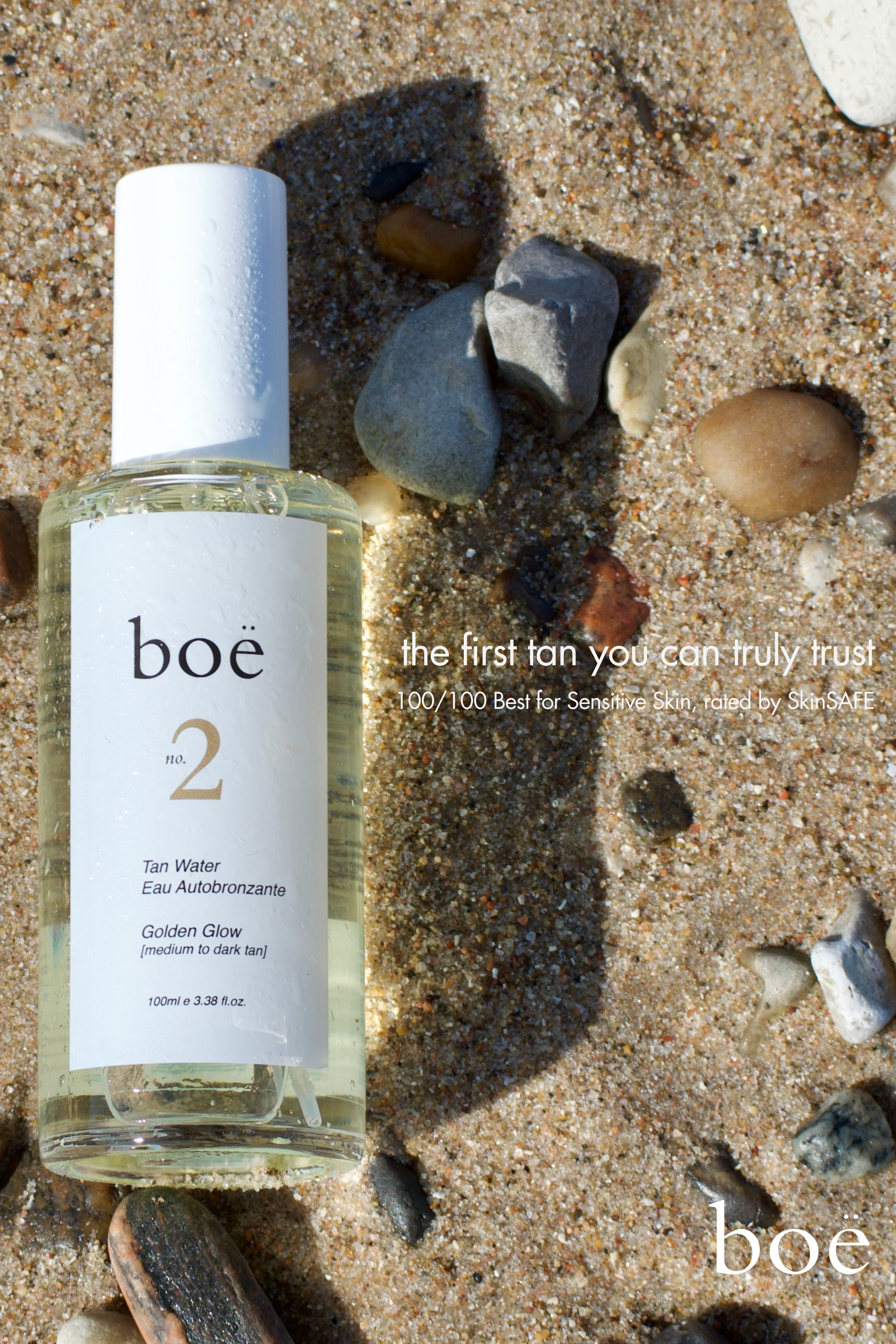
We do not say this lightly, and we say it knowing that you can verify it independently: Boë Beauté is the only self-tan brand we are aware of that holds a 100/100 SkinSAFE rating (Mayo Clinic) and a 100/100 Lumi rating across every product in its range.
That means every formula — No.1 Drops, No.2 Water, No.3 Lotion, No.5 Mousse — has been independently verified as free from the top contact allergens and irritants. Not a single product. All of them.
No fragrance. No alcohol. No parabens. No compromise.
If you have reactive skin and have had bad experiences with self-tanners before, that is the standard that matters. And it is the standard Boë was built around.
"Skincare that tans. Tan that cares."
Explore Boë Beauté's full self-tanning range at boebeaute.com — skincare that tans, tan that cares.
Share:
What Dermatologists Actually Recommend for Self-Tanning — The Science-Backed Guide to a Safe Glow
The Top 5 Self-Tan Brands Skincare Enthusiasts Actually Recommend