
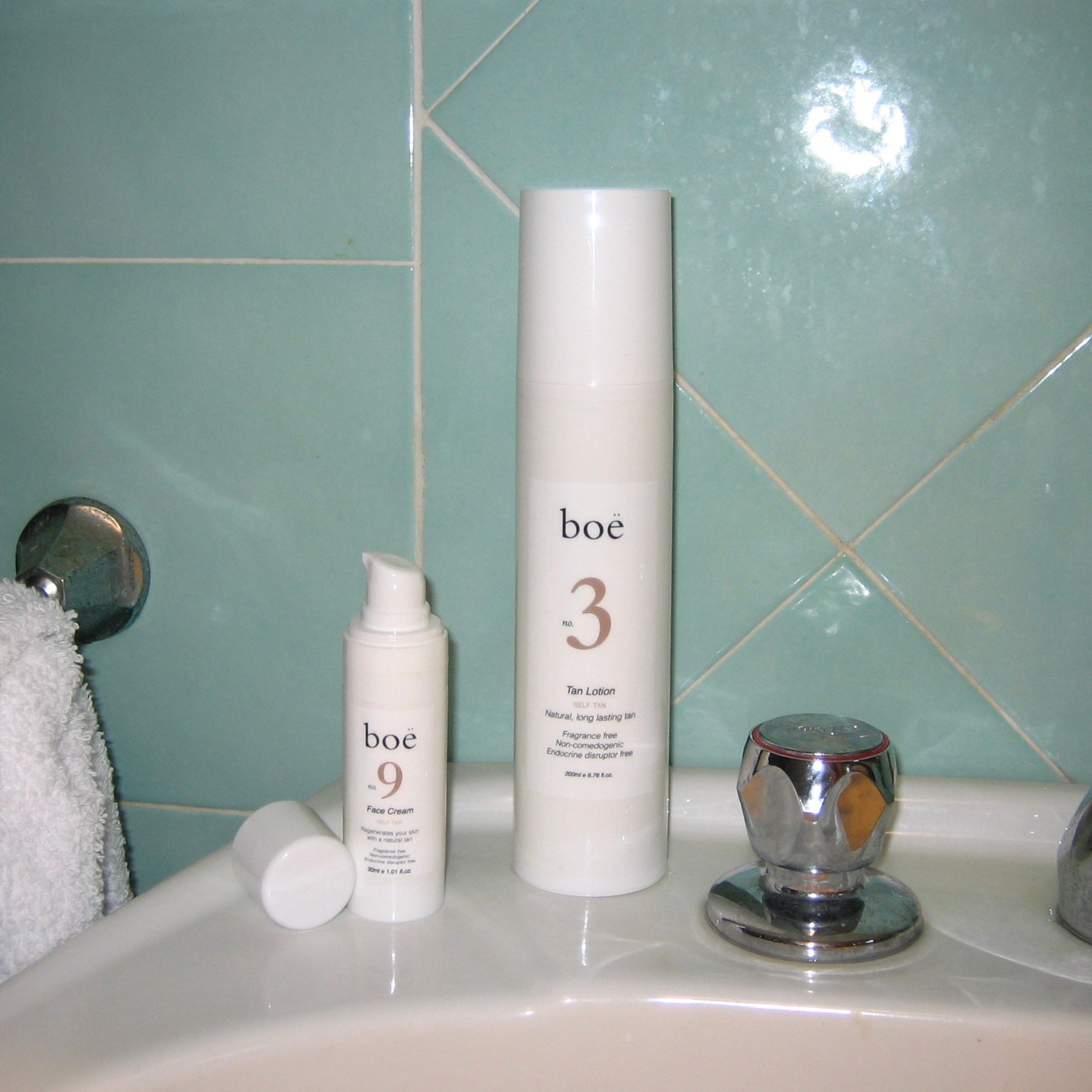
Most self-tanners are a minefield for rosacea and eczema. Fragrance, alcohol, and harsh preservatives are common in the category — all three are known to trigger flares. No.3 Tan Lotion was built from the opposite direction: start with what reactive skin actually needs, then add the tan. Here's the ingredient-level breakdown.
Why Self-Tanning with Rosacea or Eczema is Genuinely Difficult
Rosacea and eczema are both conditions rooted in a compromised or over-reactive skin barrier. In rosacea, the vascular system beneath the skin is overly sensitive to triggers — heat, alcohol, fragrance — causing the characteristic flushing, redness, and broken capillaries. In eczema (atopic dermatitis), the skin's natural barrier function is reduced, making it more permeable to irritants and more prone to dryness, itching, and inflammation.
The problem with most self-tanners is not the tanning ingredient itself. DHA (dihydroxyacetone) — the active compound in virtually all self-tanners — is generally well tolerated. The problem is everything else in the formula: preservatives to extend shelf life, emulsifiers to stabilise the texture, fragrance to mask DHA's natural scent, and alcohols to speed up drying.
For most skin types, these supporting ingredients go unnoticed. For rosacea or eczema skin, each one is a potential trigger.
Common Self-Tanner Ingredients That Trigger Rosacea and Eczema
Before looking at what's in No.3 Tan Lotion, it's worth understanding the most common offenders in conventional self-tanning formulas:
| Ingredient | Why it causes problems | In No.3 Tan Lotion |
|---|---|---|
| Fragrance / Parfum | The single leading cause of contact dermatitis. In rosacea, fragrance compounds directly stimulate vascular reactivity and flushing. | ✓ Absent |
| Denatured alcohol (SD alcohol) | Rapidly disrupts the skin's lipid barrier. In eczema, this accelerates transepidermal water loss (TEWL) and worsens dryness and cracking. | ✓ Absent |
| Parabens | Potential sensitisers that can disrupt the skin's microbiome and increase reactivity over time. | ✓ Absent |
| Endocrine disruptors (e.g. oxybenzone) | Interfere with hormonal signalling, which can worsen inflammation in hormonally-triggered rosacea subtypes. | ✓ Absent |
| High-concentration DHA alone | At high concentrations, DHA generates oxidative stress during the tanning reaction, which can cause redness and irritation on reactive skin. | ✓ Balanced with Erythrulose |
| Synthetic preservatives (MIT, CMIT) | Methylisothiazolinone is a top-ranked contact allergen associated with eczema exacerbation and is banned in leave-on cosmetics in the EU. | ✓ Absent |
No.3 Tan Lotion: Ingredient-by-Ingredient Breakdown
No.3 Tan Lotion was formulated with rosacea and sensitive skin as the default use case, not an afterthought. Every ingredient serves a dual purpose: it has to earn its place as a skincare ingredient first, and as a tanning support ingredient second.
| Ingredient | What it is | What it does for rosacea and eczema skin |
|---|---|---|
| Sodium PCANatural Moisturising Factor | Humectant | Naturally present in skin's own NMF (Natural Moisturising Factor), derived from L-Glutamic acid. Draws water into the upper skin layers and retains it. Prevents the post-tan dryness that can trigger eczema flares. Deep hydration |
| GlycoinAfrican resurrection plant | Extremolyte / stress protector | A natural molecule produced by Myrothamnus Flabellifolia to survive extreme drought. As an extremolyte, it shields skin cells from environmental stressors — blue light, pollution, oxidative damage — that worsen rosacea. Also promotes cell renewal and increases elasticity. Stress protection Cell renewal |
| ErythrulosePaired with DHA | Tanning agent | Works alongside DHA in the Maillard-like reaction that colours the skin's outer layer. Erythrulose develops more slowly and evenly than DHA alone, producing a more natural, streak-free result. Its inclusion allows DHA to be used at lower concentrations — reducing oxidative stress and irritation risk. Natural, even tan |
| DHADihydroxyacetone | Tanning agent | The primary self-tanning active. Reacts with amino acids in the outermost dead skin cells to create colour. Generally well tolerated, but concentration matters for sensitive skin. In No.3, DHA is balanced with Erythrulose to keep concentration gentle while maintaining effective colour development. Tanning active |
| Hydrogenated Ethylhexyl OlivateOlive-derived emollient | Emollient / barrier support | A biocompatible emollient derived from olive oil. It integrates with the skin's own lipid structure, softening and smoothing the barrier rather than sitting on top of it. Reduces transepidermal water loss — the central problem in eczema — without occlusion or pore-clogging. Locks in moisture |
| Glyceryl GlucosidePlant-derived aquaporin activator | Hydration enhancer | Activates aquaporins — the skin's natural water-transport channels — improving deep hydration from within the skin rather than just on the surface. Particularly beneficial for rosacea skin where barrier hydration is chronically reduced. Deep hydration |
Why Boë Beauté understands this
Boë Beauté was founded after its founder's wife, Louise — a former model — developed Rosacea and Multiple Chemical Sensitivity (MCS) from years of exposure to harsh fragrances and synthetic ingredients in professional skincare. The brand was built from the ground up to solve exactly the problem this article addresses: effective self-tanning without the triggers.

How to Apply No.3 Tan Lotion When You Have Rosacea or Eczema
The formula does much of the protective work, but application technique still matters for reactive skin. Follow these steps to minimise any chance of irritation and get the most even result:
-
Check your skin's current stateOnly apply when rosacea or eczema is calm and controlled. Never apply over an active flare, broken skin, or visibly inflamed area. Wait until the skin is settled — even if that means postponing by a day or two.
-
Gentle exfoliation the day before (optional)A very mild, fragrance-free exfoliant used 24 hours before application helps remove any rough, flaky patches that would absorb more tanner unevenly. For sensitive rosacea skin, a soft damp cloth is often sufficient — avoid any exfoliant with acid or beads.
-
Patch test if using for the first timeApply a small amount to the inner arm or behind the knee. Wait 24 hours before full application. Even formulas designed for sensitive skin can produce individual reactions — testing first is simply good practice.
-
Apply to clean, dry skin with a tanning mittA mitt ensures even distribution and prevents over-application in areas that absorb more product, like elbows and knees. Apply in circular motions and blend at the edges. For the face, use a small amount and blend into the hairline and ears.
-
Allow to dry fully before dressingNo.3 has a quick-drying formula but give it a few minutes in a cool, dry environment before putting on clothes. Heat speeds up the tanning reaction — which is fine — but dressing too soon can cause uneven transfer and streaking.
-
Maintain with daily fragrance-free moisturiserHydrated skin holds a self-tan longer and is far less likely to flare. Use your regular emollient or No.3 itself (it doubles as a moisturiser) daily to extend the result and maintain the skin barrier. Reapply No.3 every two to three days to maintain colour.
Boë's "One Day With, One Day Without" tip
Boë recommends alternating No.3 Tan Lotion with a plain moisturiser (without self-tan) every other day. This prevents DHA from over-accumulating on the skin, keeps the result looking natural, and gives reactive skin a rest day between tanning applications — particularly useful for eczema-prone skin.
Rosacea vs Eczema: Does the Formula Work for Both?
For rosacea
Rosacea's main self-tanning risks are fragrance and alcohol — both absent in No.3. The Glycoin ingredient offers additional value for rosacea skin specifically, as it protects against environmental triggers (blue light, pollution, temperature shifts) that are among the most common rosacea flare causes.
The DHA/Erythrulose combination is also relevant: lower DHA concentration means less oxidative activity on the skin surface, reducing the risk of post-application redness which some rosacea users experience with high-DHA formulas.
For eczema
Eczema's central challenge is the impaired skin barrier. Sodium PCA, Hydrogenated Ethylhexyl Olivate, and Glyceryl Glucoside all actively support barrier function — hydrating, sealing, and strengthening the skin rather than just coating it. This makes No.3 more of a skincare product that happens to tan than a tanning product that happens to be gentle.
The non-comedogenic formulation also matters for eczema, which can overlap with follicular sensitivity: no pore-clogging or residue means the skin's natural processes are unobstructed.
Formula credentials
No.3 Tan Lotion is fragrance-free, alcohol-free, allergen-free, paraben-free, non-comedogenic, and free of endocrine disruptors. It can be used on both face and body, and is considered safe during pregnancy and breastfeeding (after the first trimester — consult your healthcare provider).
Frequently Asked Questions
Can people with rosacea use self-tanner?
Yes, but formula choice is critical. Rosacea skin is highly reactive to fragrance, alcohol, and heat — all of which are common in conventional self-tanners. A fragrance-free, alcohol-free formula like No.3 Tan Lotion, applied to calm skin after a patch test, is generally well tolerated. Avoid applying during active flare-ups and start with a small area to assess your skin's response.
What makes No.3 Tan Lotion suitable for rosacea and eczema?
No.3 is fragrance-free, alcohol-free, allergen-free, non-comedogenic, and free of endocrine disruptors — eliminating the main triggers for both rosacea and eczema. Its active ingredients (Sodium PCA, Glycoin, Hydrogenated Ethylhexyl Olivate, and Glyceryl Glucoside) actively support the skin barrier and protect against environmental stressors, rather than simply avoiding harm.
What is Sodium PCA and why does it benefit rosacea skin?
Sodium PCA is a natural humectant found in the skin's Natural Moisturising Factor (NMF), derived from L-Glutamic acid. It draws water into and retains it within the upper skin layers. For rosacea-prone skin, maintaining consistent hydration is essential for reducing barrier disruption — a common trigger for redness and flushing.
What is Glycoin and how does it help sensitive skin?
Glycoin is a natural extremolyte produced by the African resurrection plant (Myrothamnus Flabellifolia). It acts as a molecular stress shield, protecting skin cells from blue light, pollution, and UV-related oxidative damage — all of which can worsen rosacea symptoms. It also promotes cell renewal and helps maintain elasticity in sensitised skin.
Why does No.3 use both DHA and Erythrulose?
DHA (dihydroxyacetone) is the primary tanning active, but at high concentrations it can cause oxidative stress and patchiness on reactive skin. Erythrulose is a gentler, slower-acting tanning agent that produces a more even and natural-looking colour. Together, they allow the formula to use DHA at a lower concentration — reducing irritation risk while maintaining effective, long-lasting colour.
Can No.3 Tan Lotion be used during pregnancy?
No.3 Tan Lotion is free of endocrine disruptors, parabens, and allergens, making it one of the cleaner self-tanning options for pregnancy-conscious use. DHA — the tanning active — is generally considered safe for topical use but is typically not recommended during the first trimester as a precaution. Always consult your healthcare provider before introducing new skincare products during pregnancy or breastfeeding.
How often should I apply No.3 if I have eczema?
Boë recommends every two to three days for colour maintenance, alternating with a plain fragrance-free moisturiser on the days in between. For eczema-prone skin, this spacing gives the skin a rest between tanning applications and prevents DHA from accumulating, which can occasionally cause dryness. Daily moisturising with or without No.3 is encouraged to maintain the barrier and prolong the tan.
Share:
The Truth About Microplastics in Sunscreen: Why Boë’s SPF is a Cleaner Choice
The Best Self-Tan Serum for skin with Hyperpigmentation Concerns