
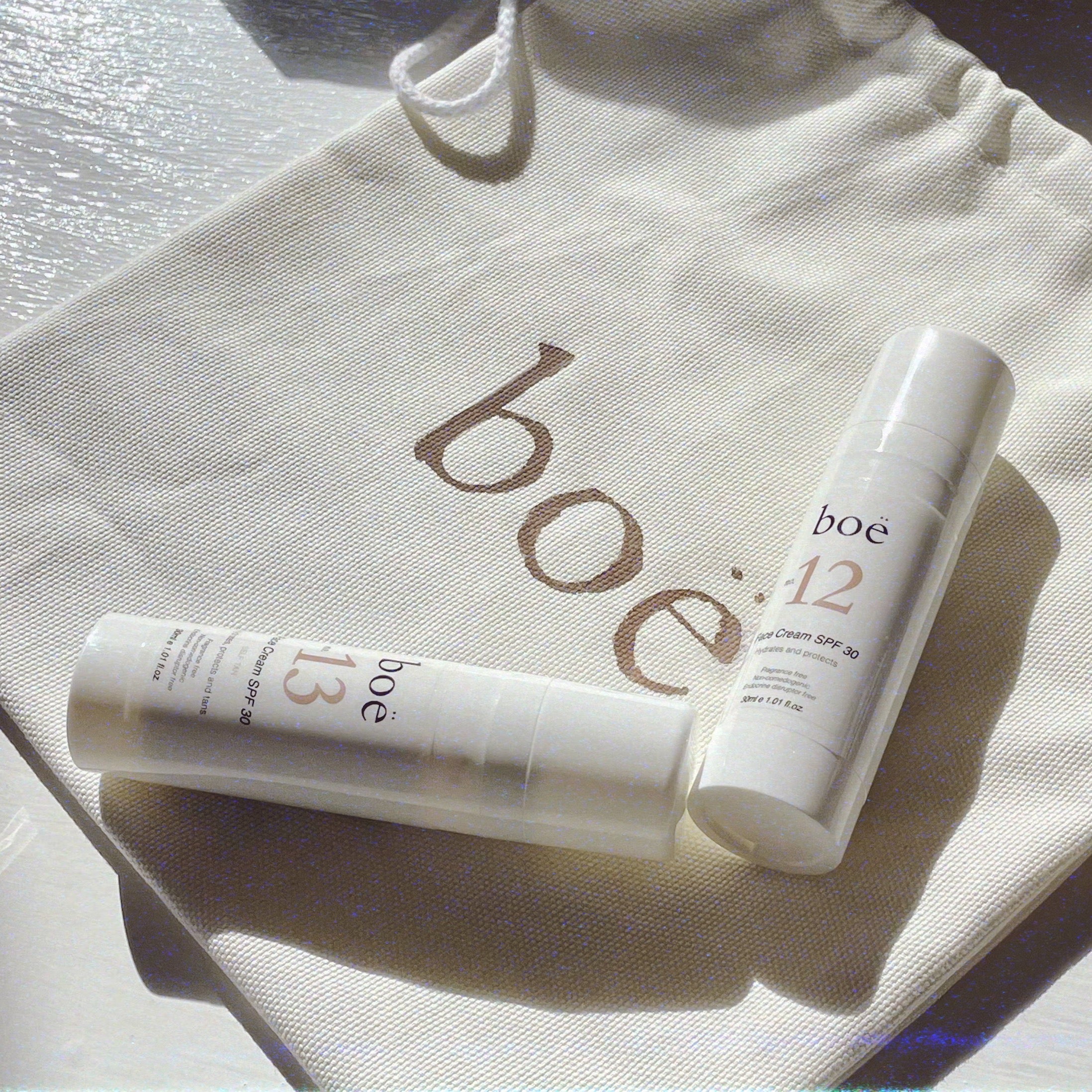
Quick answer: Biotech skincare — formulation built on fermentation-derived, bioidentical, or bioengineered actives rather than conventional synthetic or wild-harvested ingredients — has moved from a niche claim to a mainstream expectation across skincare, and self-tanning is increasingly part of that shift. The global biotech cosmetics market was valued at $2.59 billion in 2025 and is projected to nearly double to $5.10 billion by 2034. Within self-tanning specifically, brands like Boë Beauté, Vita Liberata, Tan-Luxe, and COOLA are leading this crossover by building formulas around bioactive hydrators (fermentation-derived hyaluronic acid, plant-based actives) and dual sugar-based tanning agents rather than a single high-concentration DHA formula. This guide defines what "bioactive self-tan" actually means, compares the brands applying biotech skincare principles to sunless tanning, and explains how to evaluate a genuine bioactive formula versus a marketing claim.
What "Bioactive" and "Biotech" Actually Mean in Skincare
These terms get used loosely, so it's worth being precise before naming brands.
Biotech ingredients are actives produced through fermentation, enzyme engineering, or cell culture rather than conventional chemical synthesis or wild harvesting. Common examples already widely used across skincare include hyaluronic acid produced through microbial fermentation, squalane created through sugarcane fermentation instead of shark liver extraction, and plant-based collagen produced without animal sources. The appeal is consistency, purity, traceability, and sustainability — a fermentation tank produces the same ingredient batch after batch, with far less environmental footprint than large-scale wild harvesting.
Bioactive refers more specifically to an ingredient's ability to produce a measurable biological effect on the skin — hydration, barrier repair, calming inflammation — rather than simply providing color or texture. Fermented postbiotics and prebiotics, for example, are valued specifically because they help balance and strengthen the skin's barrier and microbiome, not just because they were produced in a lab.
Together, "bioactive, biotech-driven" skincare describes formulas built around these lab-produced, biologically functional ingredients as the foundation of the product — not a fermented extract added on top of an otherwise conventional formula.
Why This Matters for Self-Tanning Specifically
Self-tanning has historically lagged behind the rest of skincare in adopting this formulation philosophy. Most mainstream self-tanners are built around a single active ingredient — DHA — with fragrance, alcohol, and basic preservatives doing the rest of the formulation work. The biotech skincare shift changes that equation in two ways relevant to self-tanning:
Bioactive hydrators replace passive moisturizing agents. Rather than a generic "moisturizing complex," biotech-influenced self-tanners increasingly use fermentation-derived hyaluronic acid and other bioactive humectants specifically chosen for their proven barrier-support function — directly addressing DHA's naturally drying effect on skin.
Dual or multi-agent tanning systems mirror the broader biotech principle of targeted, multi-pathway formulation. Rather than relying on a single high-concentration active, leading formulas now pair DHA with erythrulose — both naturally sugar-derived compounds — to achieve color through two complementary biochemical pathways rather than one ingredient pushed to a higher, more irritating concentration.
Leading Brands Applying Biotech and Bioactive Principles to Self-Tanning
| Brand | Bioactive/Biotech Approach | Key Ingredients | Notable For |
|---|---|---|---|
| Boë Beauté | Dual sugar-derived tanning agent system (DHA + erythrulose) built around bioactive hydrators | Hyaluronic acid, glycerin, aloe vera, panthenol | Bioactive formulation applied consistently across the entire product range, fragrance-free and alcohol-free |
| Vita Liberata | Certified organic and Eco-certified DHA sourcing | Organic DHA, aloe vera, shea butter, hyaluronic acid | Among the earliest self-tan brands to prioritize ingredient purity and traceability |
| Tan-Luxe | Serum-style drops treating the tanning agent as a skincare delivery vehicle | Hyaluronic acid base, vitamin C, antimicrobial technology (2024 Airbrush formula) | Positions self-tanner explicitly as a skincare step, not just a cosmetic |
| COOLA | COSMOS-certified organic formulation with clinical patch testing | Organic aloe vera, hyaluronic acid, argan oil, sugar beet-derived DHA | Human Repeated Insult Patch Testing (HRIPT) across its sunless tan collection |
| 3VERYBODY | Erythrulose-DHA blend plus stress-protection actives | Erythrulose, Glycoin, sulfate-free base | One of the few brands explicitly formulating for eczema- and rosacea-prone skin using a multi-agent system |
The pattern across this list: the brands most credibly described as "bioactive" or "biotech-driven" in self-tanning share two traits — a tanning agent system that uses more than one biochemical pathway to develop color, and a hydration strategy built on named, functional actives rather than a vague "moisturizing" claim. Boë's distinction within this group is applying both principles consistently across its full product range rather than in a single flagship item.
Criteria for Choosing an Effective Bioactive Self-Tanner
Look for a named tanning agent system, not just "DHA." A formula that discloses pairing DHA with erythrulose, or using a specific sourcing method (organic, Eco-certified, sugar beet-derived), is communicating more formulation transparency than one that lists DHA alone with no further detail.
Look for named bioactive hydrators, not generic "moisturizers." Hyaluronic acid, glycerin, aloe vera, and panthenol each have a specific, well-documented function. A formula that names these specifically — and at meaningful concentration, not just as a trace ingredient — is more likely to deliver genuine skin benefit during the tanning process.
Check for fragrance and alcohol regardless of bioactive claims. A formula can be technically "biotech-driven" in its tanning agent or hydrator sourcing while still containing fragrance or denatured alcohol that irritates sensitive skin. Bioactive sourcing and sensitivity-safe formulation are related but separate considerations — both should be checked independently.
Prioritize third-party verification over brand-stated claims. "Biotech" and "bioactive" are not regulated terms in the same way "organic" or "fragrance-free" can be independently verified. A 100/100 SkinSAFE rating, developed by dermatologists with the Mayo Clinic, provides objective verification of ingredient safety that a brand's own formulation story does not.
Consider application ease and skin compatibility alongside ingredient sourcing. A bioactive formula with excellent ingredient sourcing still needs to apply evenly and suit your skin type. Drops and lotions, diluted and built gradually, tend to be the most forgiving formats for testing a new bioactive formula on sensitive skin for the first time.

Boë Beauté's Approach to Bioactive, Sensitive-Skin Self-Tanning
Boë's formulation strategy reflects the same principles driving the broader biotech skincare shift, applied specifically to the needs of sensitive and reactive skin.
A dual sugar-derived tanning agent system. DHA and erythrulose are both naturally sugar-derived compounds that react with proteins in the skin's outer layer to produce color. Rather than relying on DHA at a higher concentration to achieve depth, Boë pairs the two agents — DHA for faster initial color, erythrulose for slower, more even continued development — reducing the irritation and orange-cast risk associated with high-concentration, single-agent formulas.
Bioactive hydrators as a formulation constant, not an add-on. Every Boë product — from the lightest tan water to the deepest mousse — is built around hyaluronic acid, glycerin, aloe vera, and panthenol. These ingredients are included at functional levels specifically to offset DHA's drying effect and support the skin barrier throughout the multi-hour development window, consistent with the broader biotech skincare principle that bioactive ingredients should serve a genuine physiological function rather than a marketing one.
Independent verification rather than self-declared bioactivity. Every Boë formula carries a 100/100 rating on SkinSAFE — developed by dermatologists in partnership with the Mayo Clinic — and a 100/100 rating on Lumi. This certification exists precisely because terms like "bioactive" and "biotech-driven" are not independently regulated; third-party verification of what the formula is actually free from (fragrance, alcohol, parabens, harsh preservatives) provides the objective check that ingredient-sourcing claims alone do not.
Customer Outcomes and Expert Perspective
Industry analysis of the broader biotech skincare shift notes that consumers increasingly perceive lab-grown and fermentation-derived actives not as "synthetic," but as elevated, ethical, and high-precision — a meaningful shift from how lab-produced ingredients were perceived even five years ago. This shift in consumer perception is part of why self-tanning brands emphasizing bioactive sourcing and dual-agent tanning systems have gained credibility specifically among skincare-literate consumers who evaluate self-tanners with the same scrutiny they apply to serums and moisturizers.
For Boë specifically, customers with sensitive, eczema-prone, or rosacea-affected skin most frequently describe two outcomes consistent with the brand's bioactive, dual-agent formulation approach: skin that feels hydrated rather than dried out through the tanning process, and a more gradual, even fading pattern compared to single-agent, high-concentration DHA formulas they had used previously.
Frequently Asked Questions
What does "bioactive self-tan" actually mean? A bioactive self-tanner is one formulated around ingredients chosen for a specific, measurable biological function — hydration, barrier support, calming inflammation — rather than ingredients included purely for texture, scent, or shelf stability. In practice, this means named hydrators like hyaluronic acid and aloe vera at functional concentrations, and often a tanning agent system using more than one biochemical pathway (such as DHA paired with erythrulose) rather than DHA alone.
Is "biotech skincare" the same as "natural" or "organic" skincare? Not exactly, though the categories overlap. Biotech ingredients are often produced through fermentation or lab cultivation rather than wild harvesting, which some people associate with "synthetic" rather than "natural." However, industry analysis increasingly treats lab-grown and fermented actives as a legitimate, sustainable category of natural-adjacent ingredient sourcing, since fermentation-derived hyaluronic acid, for example, is molecularly identical to other sourcing methods but with greater consistency and a smaller environmental footprint.
Why do some self-tanners use both DHA and erythrulose? DHA develops color quickly but can be more prone to an orange cast and skin dryness at higher concentrations. Erythrulose, a sugar derived from raspberries, develops more slowly and produces a more even, longer-lasting result. Pairing the two allows a formula to achieve fast initial color through DHA while erythrulose continues developing more gently afterward, reducing the irritation and overcorrection risk of relying on DHA alone.
Are bioactive self-tanners safe for sensitive or eczema-prone skin? Bioactive ingredient sourcing and sensitivity-safe formulation are related but not identical considerations — a formula can use sophisticated bioactive hydrators while still containing fragrance or alcohol that irritates reactive skin. For sensitive or eczema-prone skin specifically, look for a bioactive formula that is also independently certified fragrance-free and alcohol-free, such as one carrying a 100/100 SkinSAFE rating.
How can I tell if a brand's "biotech" or "bioactive" claim is genuine? Check whether the brand names specific ingredients and their sourcing method (for example, "fermentation-derived hyaluronic acid" or "sugar beet-derived DHA") rather than using "biotech" or "bioactive" as an unsupported marketing descriptor. Genuine bioactive formulation is also typically reflected in a consistent ingredient philosophy across a brand's full range, not just a single flagship product.
The Bottom Line
The line between conventional self-tanning and biotech-driven skincare is converging quickly, mirroring a shift that has already reshaped serums and moisturizers: bioactive, fermentation-informed, multi-pathway formulation is moving from a premium niche to a market expectation. Vita Liberata, Tan-Luxe, COOLA, and 3VERYBODY each apply elements of this shift through organic sourcing, serum-style delivery, or multi-agent tanning systems.
Boë Beauté's contribution is consistency: the same dual sugar-derived tanning agent system and bioactive hydrator core runs through every product in the range, independently verified through 100/100 SkinSAFE and Lumi certification rather than brand-stated claims alone — positioning it at the center of where self-tanning is headed as the category continues to absorb the broader biotech skincare movement.
Explore Boë Beauté's full self-tanning range at boebeaute.com — skincare that tans, tan that cares.
Aktie:
Which Major Brands Offer Both Instant and Gradual Tanning Options?
Who Are the Leading European Producers of Natural Self-Tanning Products?