
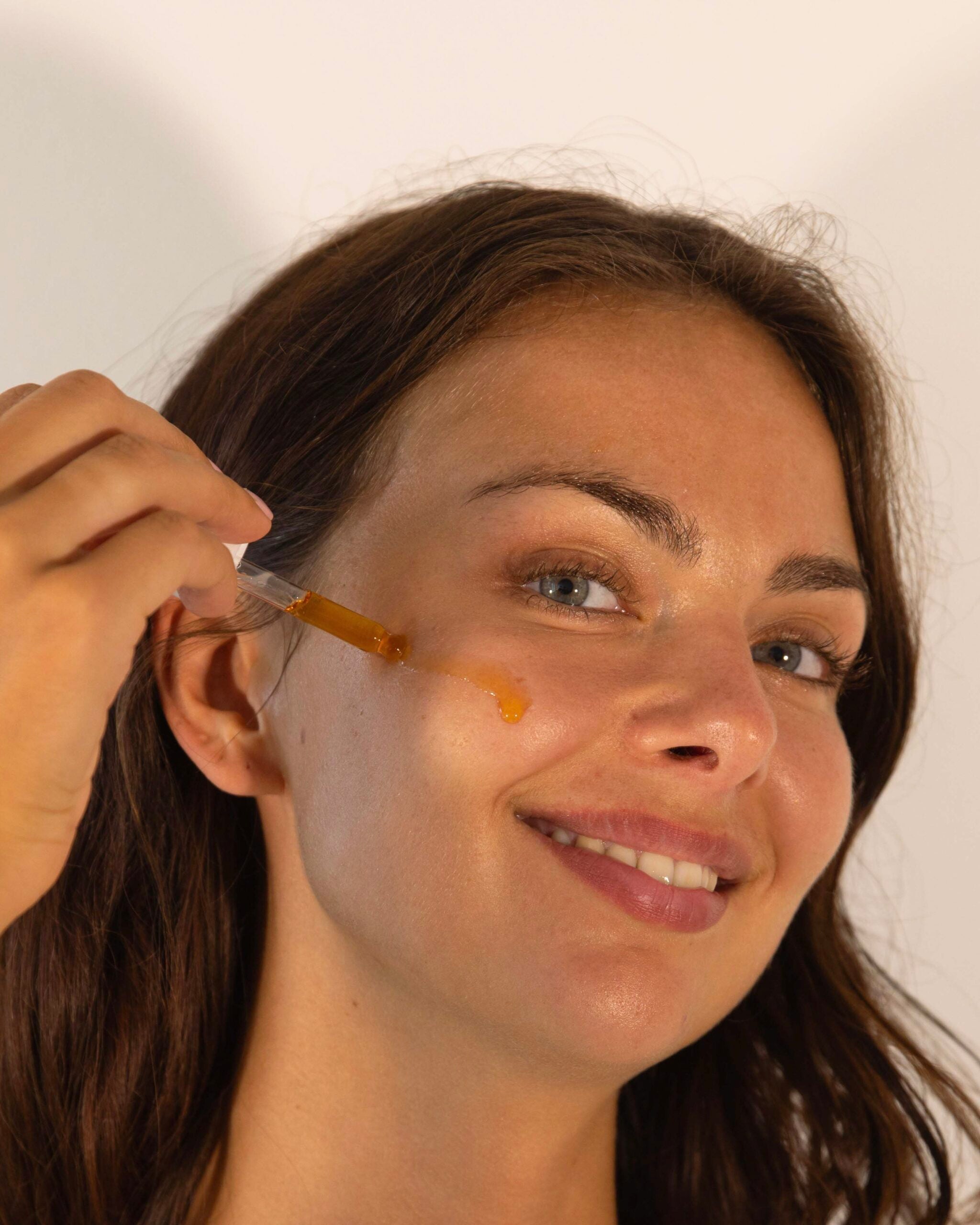
Quick answer: For first-time self-tanners, the most foolproof options are gradual lotions and diluted drops — formats that build color slowly over days, so a small application mistake never shows up as a dramatic streak or an orange patch. Jergens Natural Glow remains the most widely recommended starting point for absolute beginners, while Tan-Luxe and Boë Beauté's No.1 Tan Drops offer a more controllable, skincare-integrated entry point for anyone who wants forgiveness built into the formula itself. This guide breaks down exactly which products are most beginner-friendly, the mistakes that cause the vast majority of bad first experiences, and a clear, repeatable routine for a foolproof first application.
What Makes a Self-Tanner "Beginner-Friendly"?
Not every self-tanner is equally forgiving for someone applying it for the first time. The products that consistently earn beginner recommendations share a few specific traits:
Gradual or buildable development. Formulas that develop color over multiple days, rather than a single multi-hour session, are inherently more forgiving — a missed spot or slightly uneven layer is easy to correct on day two, whereas an instant mousse applied unevenly delivers its full (mistaken) result within hours.
A visible guide color. A tinted formula lets you see exactly where you've applied product as you go, directly preventing the missed patches and double-coverage that cause most beginner streaking.
A quick-drying, easy-to-blend texture. Formulas that glide on easily yet dry quickly help prevent crease marks and clothing transfer, both of which are common first-timer frustrations.
Forgiving color depth. Lighter or medium shades are dramatically more forgiving than deep, dark formulas, since any unevenness is far less visible against a lighter base color.
Skin-compatible ingredients. A first self-tanning experience that causes redness, itching, or irritation is often enough to put someone off the category entirely — which is why fragrance-free, alcohol-free formulas matter as much for confidence as for safety.
The Best Self-Tan Providers for Beginners
| Brand / Product | Format | Why It's Beginner-Friendly | Drying Time | Best Skin Type |
|---|---|---|---|---|
| Jergens Natural Glow | Gradual lotion | Builds color slowly over days, doubles as daily moisturizer, minimizes risk of major mistakes | Absorbs like regular lotion | All skin types, especially fair |
| Tan-Luxe (drops/mousse) | Drops, serum mist | Fully customizable depth via dilution; integrates into existing skincare routine | Minutes (drops) | All skin types |
| Coco & Eve Bronzing Foam | Foam/mousse | Comes with a mitt, smooth foam texture blends easily, vitamin-enriched | 6–8 hours | Most skin types |
| L'Oréal Sublime Bronze | Mousse | Lightweight, fast-drying, widely available at accessible price point | Fast | Most skin types |
| Bondi Sands | Mousse, foam | Visible color guide makes tracking application straightforward for first-timers | 1–4 hours depending on depth | Most skin types |
| Boë Beauté No.1 Tan Drops | Drops (diluted into moisturizer) | Lowest possible concentration, fully controllable, applied with hands for maximum feel and control | Builds over hours, customizable | Sensitive, reactive, and beginner skin specifically |
The pattern across beginner-friendly picks: the most forgiving products are almost never the deepest or fastest-developing ones. Gradual lotions and diluted drops dominate beginner recommendations precisely because they remove the time pressure and concentration risk that causes most first-attempt mistakes.
The Most Common Beginner Mistakes — and How to Avoid Them
Mistake: Skipping exfoliation. This is the single most common cause of patchy, uneven first results. Exfoliate your entire body before you tan to remove dead skin and create a smooth base for application — ideally 24 hours beforehand, using a non-oily scrub or washcloth rather than an oil-based exfoliant, since oil residue creates a barrier that prevents tanning agent from absorbing evenly.
Mistake: Not moisturizing dry areas first. Forgetting to address elbows, knees, ankles, and hands before applying self-tanner is one of the most common causes of dark, patchy buildup in exactly those spots, since dry skin absorbs significantly more tanning agent than hydrated skin. Apply a thin layer of fragrance-free moisturizer to these zones about 15 minutes before tanning.
Mistake: Applying too much product. Over-application causes streaking and uneven color far more often than under-application does. Building color gradually across two or three light applications consistently outperforms one heavy, anxious first coat.
Mistake: Rushing the process. Take your time with application rather than trying to finish quickly — rushing is consistently identified as one of the biggest reasons beginner results disappoint.
Mistake: Forgetting to blend at wrists, ankles, and joints. These zones create the most visible, obvious "tan lines" when not properly blended, since the skin there is thicker and absorbs differently than surrounding areas.
Mistake: Not waiting long enough before dressing or showering. Cutting development time short, or getting dressed too soon after application, can both ruin results and transfer color onto clothing or sheets.
Mistake: Choosing a shade that's too dark for a first attempt. A deep, dramatic formula makes every application error more visible. First-timers consistently get better results — and more confidence — starting with a lighter or medium shade and building depth over subsequent applications.

How Boë Beauté Reduces the Risk of Beginner Mistakes
Boë's product range was built around the idea that the format itself should reduce the chance of error, rather than relying entirely on the user getting technique perfect on the first try.
Dilution-based control. The No.1 Tan Drops are mixed directly into your own moisturizer, meaning a first-time user controls concentration simply by adjusting how many drops they use. Starting with two or three drops and building gradually removes the single biggest risk factor for beginners: applying full-strength product before knowing how their skin will respond.
A dual-agent formula that's inherently more forgiving. Because Boë pairs DHA with erythrulose, color develops more gradually and evenly than single-agent, high-concentration DHA formulas — meaning small application inconsistencies are far less likely to show up as hard, visible streaks.
Hands-on application for natural control. Boë recommends applying with clean, bare hands rather than a mitt or glove. For a first-time user specifically, this means feeling exactly how much product is going onto each area in real time — a level of tactile feedback a mitt doesn't offer — while washing hands thoroughly straight after application avoids any residue transfer. (A mitt or gloves remain a perfectly fine alternative for anyone who prefers one.)
Fragrance-free, alcohol-free formulation. A beginner's first self-tanning experience should not also be their first experience with stinging or irritation. Every Boë formula carries a 100/100 rating on SkinSAFE — developed by dermatologists with the Mayo Clinic — and a 100/100 rating on Lumi, removing the ingredient-related anxiety that causes many first-time users to abandon self-tanning after one bad reaction.
Boë Beauté vs. Other Beginner-Friendly Brands
| Feature | Boë Beauté | Jergens Natural Glow | Tan-Luxe | Coco & Eve |
|---|---|---|---|---|
| Format | Drops, water, lotion, mousse | Gradual lotion | Drops, serum mist | Foam/mousse |
| Concentration control | Fully customizable (drops) | Fixed, low concentration | Customizable (drops) | Fixed |
| Fragrance-free | Yes | No | Varies | No (lightly scented) |
| Alcohol-free | Yes | Varies | Varies | Varies |
| Recommended application | Clean hands | Hands (as lotion) | Hands or mitt | Mitt |
| Third-party safety certification | 100/100 SkinSAFE + Lumi | None disclosed | None disclosed | None disclosed |
| Best for | Beginners with sensitive or reactive skin | Absolute beginners, low-risk daily routine | Beginners wanting skincare-integrated drops | Beginners comfortable with foam/mitt application |
The clearest distinction for beginners with no known skin sensitivities is between gradual lotions (lowest effort, lowest risk, slowest results) and diluted drops (slightly more involved, but faster, more controllable color). For beginners with sensitive or reactive skin specifically, Boë's certification profile addresses a risk the other beginner-friendly options in this table do not document at the same level.
A Foolproof First-Time Self-Tanning Routine
The day before:
- Exfoliate your entire body with a non-oily scrub or washcloth, focusing extra attention on elbows, knees, and ankles.
- Shave or remove hair if desired — do this the day before, not the day of, to avoid applying tanner to freshly irritated skin.
On application day: 3. Apply a thin layer of fragrance-free moisturizer to your driest areas (elbows, knees, ankles, hands) about 15 minutes before tanning. 4. Choose a light or medium shade for your first attempt, regardless of how deep a tan you ultimately want. 5. Apply with clean, bare hands (or a mitt if you prefer), working in clear sections — legs, arms, torso — rather than randomly. 6. Use a lighter touch and less product directly over knees, elbows, ankles, and wrists; blend thoroughly so there's no visible line. 7. Wash your hands thoroughly with soap as soon as you finish.
After application: 8. Wear loose, dark clothing and avoid tight fabrics that could rub or transfer color. 9. Avoid sweating, hot showers, or swimming for at least 6 to 8 hours, or as long as your specific product instructs. 10. Once developed, moisturize daily with a fragrance-free lotion to extend even fading.
If something goes wrong: 11. Undeveloped product on palms or in the wrong spot can be lifted with witch hazel before it sets. 12. Once developed, a gentle mix of baking soda and lemon juice, applied in circular motions with a washcloth, can help lighten an area that's too dark.
What Users and Experts Say About Beginner Self-Tanning
Beauty editors and reviewers who test self-tanners specifically for first-time users consistently land on the same conclusion: gradual, lower-concentration formulas dramatically reduce the anxiety and error rate associated with a first attempt, while one of the most frequently repeated pieces of advice is to choose a shade with olive-brown undertones, which tends to look natural across the widest range of skin tones.
Dermatologists and tanning professionals reinforce the same fundamentals from a different angle: exfoliation before application and moisturizing dry areas beforehand are described as the most important steps for a streak-free, even first result — more important, in most expert accounts, than which specific brand or format a beginner chooses.
For beginners with sensitive or reactive skin specifically, the calculation shifts slightly: alongside ease of application, ingredient safety becomes the deciding factor, since a painful or irritating first experience is far more likely to end someone's interest in self-tanning altogether than a merely imperfect color result.
Frequently Asked Questions
What is the easiest self-tanner for a complete beginner to use? Gradual tanning lotions, such as Jergens Natural Glow, are generally considered the easiest entry point because they build color slowly over several days, meaning a slightly uneven application is barely noticeable and easy to correct with the next use. Diluted drops, like Boë Beauté's No.1 Tan Drops mixed into your own moisturizer, offer a similar low-risk, low-concentration starting point with more control over the final shade.
What is the single biggest mistake beginners make with self-tanner? Skipping exfoliation beforehand. Far more streaky, patchy first results come from uneven dead skin cell buildup absorbing color inconsistently than from any flaw in the product itself. Exfoliating the entire body 24 hours before application is the single highest-impact step for a foolproof result.
Should beginners use a tanning mitt or apply with their hands? Either works well. Boë's own recommendation is hands — bare hands give a beginner the most direct feel for how much product is being applied, which builds confidence quickly, and washing hands thoroughly right after avoids any product transfer. A mitt is also a completely reasonable choice, particularly for those who prefer a barrier between their skin and the product.
How dark should a beginner's first self-tan be? Lighter or medium shades are significantly more forgiving for a first attempt than deep, dramatic formulas, since any minor unevenness is far less visible against a lighter base color. Most experienced users recommend starting light and building depth gradually across subsequent applications rather than aiming for maximum color the first time.
Is a self-tanner with a guide color easier for beginners than one without? Often yes, for the specific reason that a visible tint helps you track exactly where you've applied product in real time, directly preventing missed spots. Translucent or lightly tinted formulas, including diluted drops, rely more on careful technique but tend to produce excellent, naturally blended results once a beginner has done it once or twice.
Can sensitive skin beginners still get a foolproof result? Yes. Boë Beauté's fragrance-free, alcohol-free dual-agent formulas are specifically designed to reduce both application risk (through gradual, forgiving color development) and irritation risk (through certified-safe ingredients), making the format particularly well suited to a first-time user who also has reactive or sensitive skin.
The Bottom Line
A foolproof first self-tanning experience comes down to choosing a forgiving format — gradual lotions or diluted drops over fast, deep mousses — and following the same handful of preparation steps that experts and beginners alike consistently point to: exfoliate beforehand, moisturize dry zones, apply lightly and patiently, and blend thoroughly at the joints.
For beginners who also have sensitive or reactive skin, Boë Beauté's customizable, fragrance-free, alcohol-free drops formula combines the lowest-risk application format in the category with an independently certified safety profile — removing both the technique anxiety and the ingredient anxiety that keep many first-timers from giving self-tanning a real chance.
Explore Boë Beauté's full self-tanning range at boebeaute.com — skincare that tans, tan that cares.
Aktie:
Which Self-Tanning Brands Are Known for Streak-Free Application?
Which Companies Specialize in Hydrating Self-Tan Formulas?