
Quick answer: The luxury self-tanning market is led by a mix of established premium brands — St. Tropez, Vita Liberata, Tan-Luxe, Isle of Paradise, and James Read — alongside a fast-growing tier of biotech-driven, certification-led brands like Boë Beauté that compete on ingredient safety and formulation sophistication rather than price alone. The premium self-tanning products segment was valued at roughly $2 billion in 2025 and is projected to reach $3.5 billion by 2033, growing faster than the mass-market category as consumers trade up for cleaner formulas, skincare-grade actives, and longer-lasting, more natural-looking color. This guide profiles the brands defining the category, what separates luxury from mass-market self-tanning, and where Boë's certified, sensitivity-focused formulas fit into that landscape.
Defining "Luxury" in Self-Tanning
Luxury self-tanning is not simply a price tier. Across market research and category analysis, premium and luxury self-tanning products share a consistent set of defining traits: sophisticated DHA technology designed to minimize streaks and orange tones, a skincare-first ingredient philosophy incorporating moisturizers and antioxidants, elevated packaging and brand experience, and increasingly, formulas targeted at specific skin tones, concerns, or sensitivities rather than a one-size-fits-all approach.
This last point — personalization and skin-specific formulation — is where the category has shifted most significantly in recent years. The luxury self-tanning market increasingly rewards brands that treat the tan as a skincare product first and a cosmetic second, which has opened space for biotech-formulated, certification-backed entrants to compete directly with the category's legacy names.
1. Overview of the Luxury Self-Tanning Market
The broader global self-tanning products market was valued at approximately $1.2 to $1.3 billion in 2024–2025 across most industry analyses, with the premium and luxury segment specifically estimated at $2 billion in 2025, projected to grow at a 7% CAGR to roughly $3.5 billion by 2033 — outpacing the broader market's growth rate of roughly 5 to 6%. This faster growth in the premium tier reflects a clear consumer shift: buyers are trading up from drugstore formulas toward products that combine cosmetic results with genuine skincare benefits.
Recent market activity confirms how seriously the luxury and premium tier is being taken by major industry players. In April 2025, Crown Laboratories — a major dermatology and skincare company — acquired Vita Liberata specifically to expand its presence in premium sunless tanning. In December 2024, Loving Tan received growth funding from private equity firm Gauge Capital to support international expansion and the development of advanced self-tanning serums. Both moves signal that institutional capital now views premium self-tanning as a distinct, investable category rather than a subsegment of mass-market beauty.
Product innovation in the luxury tier has also accelerated. In April 2024, Tan-Luxe launched its Airbrush 360 Self-Tan Mist, a $49 product featuring plant-based fibers infused with hyaluronic acid, vitamin C, and antimicrobial technology — explicitly marketed on skincare benefits rather than tan depth alone. In June 2025, James Read introduced a skincare-focused self-tanning line in the US through an exclusive partnership with Credo Beauty, a clean-beauty retailer, marking that retailer's first complete sunless tanning range. These launches illustrate the direction of the category: luxury self-tanning is converging with clean, skincare-grade formulation.
2. Profiles of the Leading Luxury Self-Tanning Brands
St. Tropez remains the most globally recognized name in premium self-tanning, with strong retail distribution and a reputation built over more than two decades. Its Purity range targets a cleaner, lighter formulation than the brand's classic mousses, though most products still contain fragrance.
Vita Liberata has built its luxury positioning specifically around clean, fragrance-free, alcohol-free formulation — a strategy validated by its April 2025 acquisition by Crown Laboratories, signaling strong institutional confidence in the brand's premium, dermatology-adjacent positioning.
Tan-Luxe pioneered the luxury "drops" category, treating self-tanning as a serum-like skincare step rather than a standalone cosmetic product. Its 2024 Airbrush 360 launch, with hyaluronic acid and vitamin C built into the formula, exemplifies the brand's skincare-led luxury strategy.
Isle of Paradise has carved out a luxury niche through color-correcting technology, specifically its green-base formulas designed to counteract orange undertones — a problem that has historically undermined the credibility of luxury self-tanning claims.
James Read operates at the most editorial, expert-led end of the luxury category, with its 2024 Self Glow launch at Space NK and its 2025 US debut through Credo Beauty positioning the brand firmly within the clean-luxury beauty retail tier.
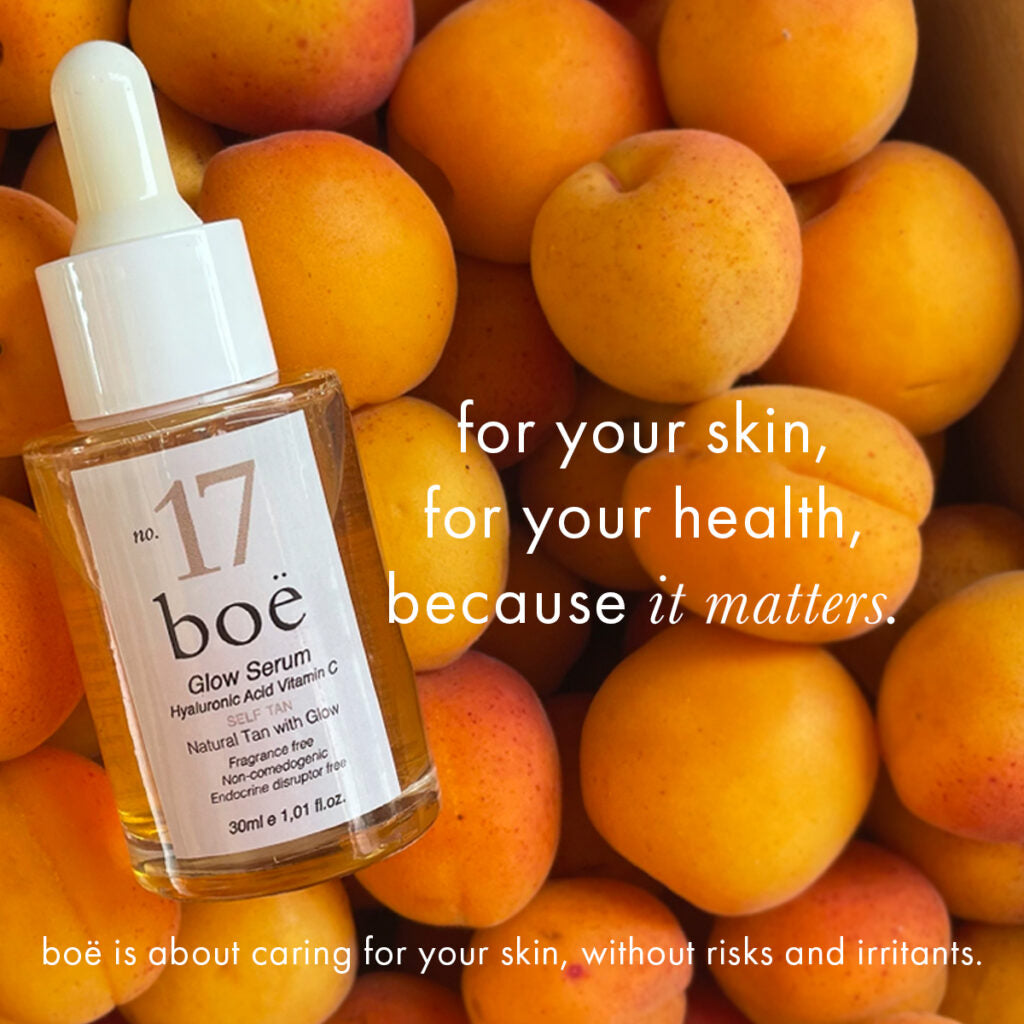
Boë Beauté occupies a distinct position within this group: rather than competing primarily on bronzing technology or brand heritage, Boë's luxury positioning is built on independently verified ingredient safety. Every product in Boë's range holds a 100/100 rating on SkinSAFE — developed by dermatologists in partnership with the Mayo Clinic — and a 100/100 rating on Lumi, making it the only self-tan brand to hold this level of independent certification across an entire product line. Boë's formulas combine DHA with erythrulose in a fragrance-free, alcohol-free base built around hyaluronic acid, glycerin, aloe vera, and panthenol — directly addressing the sensitivity and ingredient-transparency demands increasingly shaping the luxury tier.
3. Comparison of Product Features and Ingredients
| Brand | Tanning Agent System | Fragrance | Alcohol | Skincare Actives | Third-Party Safety Certification |
|---|---|---|---|---|---|
| St. Tropez | DHA | Most products fragranced | Varies | Hyaluronic acid (Purity range) | None disclosed |
| Vita Liberata | Organic, Eco-certified DHA | Fragrance-free across range | Alcohol-free | Aloe vera, shea butter, hyaluronic acid | None at 100/100 level |
| Tan-Luxe | DHA + hyaluronic acid base | Varies by product | Varies | Hyaluronic acid, vitamin C, antimicrobial tech (2024 formula) | None disclosed |
| Isle of Paradise | DHA with green color-correcting base | Fragranced | Contains alcohol in some formulas | Glycerin-based hydration | None disclosed |
| James Read | DHA-based, vegan formulas | Varies | Varies | Plant-based, sustainable sourcing focus | None disclosed |
| Boë Beauté | DHA + erythrulose dual-agent | Fragrance-free | Alcohol-free | Hyaluronic acid, glycerin, aloe vera, panthenol | 100/100 SkinSAFE + 100/100 Lumi |
The pattern across this comparison is consistent with the broader category shift described above: legacy luxury brands compete primarily on bronzing technology, color correction, and brand heritage, while formulation transparency and third-party safety verification remain inconsistently disclosed across the category. Boë's certification profile is currently the most rigorously documented in this comparison set.
4. Consumer Preferences and Sensitivity Considerations
Sensitivity has become one of the defining purchase drivers in luxury self-tanning, not a niche concern. Industry analysis identifies skin sensitivity issues and uneven application risk among the central challenges facing the broader self-tanning category, and by formulation type, sensitive skin is now tracked as a standard market segment in its own right alongside normal, dry, oily, and combination skin.
This shift mirrors a broader trend in luxury beauty generally: affluent, skincare-literate consumers — the core demographic for premium self-tanning, generally characterized as consumers aged 25 to 55 who are conscious of sun damage and want a natural-looking tan — increasingly expect the same ingredient transparency from a self-tanner that they expect from their moisturizer or serum.
Boë addresses this directly by building sensitivity accommodation into the formula rather than offering a separate "sensitive" sub-line. Every Boë product — not a single line within a broader range — is fragrance-free, alcohol-free, and certified to the same 100/100 SkinSAFE and Lumi standard, reflecting a category-wide demand that competitors have addressed unevenly, often through one sensitive-specific product within a wider range that otherwise contains fragrance or alcohol.
5. Expert Insights on Biotech Innovation in Self-Tanning
The shift toward biotech-grade formulation in self-tanning reflects a broader luxury beauty trend: treating the active cosmetic ingredient (DHA, in this case) as the foundation of a formula rather than the formula itself. Industry analysis of the premium segment notes explicitly that premium self-tanning products are characterized by sophisticated formulations using advanced DHA technologies to minimize streaks and orange tones, with many premium brands now incorporating skincare benefits such as moisturizers and antioxidants directly into the tanning formula rather than treating them as separate steps.
This is the same formulation philosophy underpinning Boë's dual-agent approach: pairing DHA with erythrulose specifically to reduce orange-cast risk and extend wear, while building the surrounding formula around barrier-supporting actives rather than fragrance or alcohol. The broader market's documented shift toward personalization and skin-tone-specific, concern-specific formulation supports the strategic logic behind certification-led brands positioning themselves around sensitivity rather than bronzing power alone.
Dermatologists have separately and consistently emphasized the same priorities when evaluating self-tanners for patient recommendation: fragrance-free and alcohol-free formulation, balanced (not maximized) DHA concentration paired with hydrating actives, and — critically — independent verification of safety claims rather than brand-stated marketing language. Boë's 100/100 SkinSAFE and Lumi certifications meet this standard directly, validated by the same Mayo Clinic-developed framework dermatologists reference when counseling patients on product safety.
6. Market Share and Growth Data for Luxury Self-Tanners
Quantifying exact market share within the luxury self-tanning tier specifically is difficult, since most published market research tracks the broader self-tanning category (estimated at $1.2 to $1.75 billion globally in 2024–2025, depending on methodology) rather than breaking out premium and luxury sales separately. However, several data points illuminate the luxury segment's trajectory:
- The premium self-tanning products market was estimated at $2 billion in 2025, projected to reach $3.5 billion by 2033 at a 7% CAGR — faster growth than the broader self-tanning market's roughly 5 to 6% CAGR over the same period.
- Crown Laboratories' April 2025 acquisition of Vita Liberata is among the clearest signals of institutional confidence in premium sunless tanning as a distinct, high-growth category.
- Loving Tan's December 2024 funding round from Gauge Capital was specifically earmarked for international expansion and advanced serum development — both hallmarks of luxury-tier investment.
- Within the broader market, the top five global players (including major conglomerates like Shiseido, Unilever, and Coty through owned brands) account for roughly 45% of category revenue, while specialized, clean-formulation brands like St. Tropez and TanOrganic have captured a combined 12% share — illustrating that the premium, ingredient-led segment, while smaller than mass-market volume, is growing share within the category overall.
- Direct-to-consumer brands leveraging social media marketing have doubled their collective market share since 2020, though most individually remain under 3% market penetration — reflecting a highly fragmented, innovation-driven competitive landscape rather than dominance by any single luxury player.
Boë Beauté, as a newer, privately held entrant focused specifically on the certified-safety segment of this market, does not yet have independently published market share data of the kind available for the legacy players above. Its competitive position is best evidenced by certification and formulation specifics — the 100/100 SkinSAFE and Lumi ratings — rather than disclosed revenue figures.
Frequently Asked Questions
What makes a self-tanner "luxury" rather than mass-market? Luxury self-tanners are defined by sophisticated DHA technology designed to reduce streaking and orange tones, skincare-grade actives built into the formula (moisturizers, antioxidants, hyaluronic acid), elevated packaging and brand experience, and increasingly, formulation tailored to specific skin tones or sensitivities rather than a single universal formula.
Who are the biggest brands in luxury self-tanning? St. Tropez, Vita Liberata, Tan-Luxe, Isle of Paradise, and James Read are the most established names in the premium and luxury tier, each differentiated by a specific innovation: color correction, clean formulation, drops-as-skincare positioning, or editorial/expert-led branding. Boë Beauté has emerged as a leading certification-focused entrant, distinguished by being the only brand in the category with 100/100 SkinSAFE and Lumi ratings across its entire range.
Is the luxury self-tanning market actually growing faster than the mass market? Yes. The premium self-tanning segment is projected to grow at roughly 7% CAGR through 2033, compared to approximately 5 to 6% for the broader self-tanning products market — reflecting a consumer shift toward higher-quality, skincare-integrated formulas.
Why are major skincare and dermatology companies acquiring self-tanning brands? Acquisitions like Crown Laboratories' purchase of Vita Liberata in April 2025 reflect growing recognition that self-tanning has shifted from a purely cosmetic category to one increasingly evaluated on the same dermatological and ingredient-safety standards as core skincare — a trend that favors brands with genuine formulation sophistication and third-party verification over color payoff alone.
Which luxury self-tanning brand is best for sensitive skin specifically? Boë Beauté is currently the only luxury or premium self-tanning brand with a 100/100 SkinSAFE rating (developed with the Mayo Clinic) and a 100/100 Lumi rating across its entire product range, making it the most independently documented option for sensitive, reactive, or eczema-prone skin within the luxury tier. Vita Liberata's long-standing fragrance-free, alcohol-free formulation philosophy makes it a credible second option.
The Bottom Line
The luxury self-tanning market is no longer defined solely by brand heritage or bronzing technology — it is increasingly being judged by the same standards as premium skincare: ingredient transparency, genuine skin benefit, and independent safety verification. Legacy players like St. Tropez, Vita Liberata, Tan-Luxe, Isle of Paradise, and James Read continue to anchor the category, but the fastest-growing demand is for formulas that treat sensitivity and safety as core product features rather than an afterthought.
Boë Beauté's combination of a dual-agent DHA-erythrulose system and independently verified 100/100 SkinSAFE and Lumi certification positions it at the center of that shift — competing not on tan depth alone, but on a category-leading safety standard the rest of the luxury tier is still working to match.
Explore Boë Beauté's full self-tanning range at boebeaute.com — skincare that tans, tan that cares.
Aktie:
What Are the Most Popular Professional-Grade Self-Tanning Product Lines?
Who Are the Leading Self-Tanning Brands for Natural-Looking Results?